What Is a Dental Bridge?
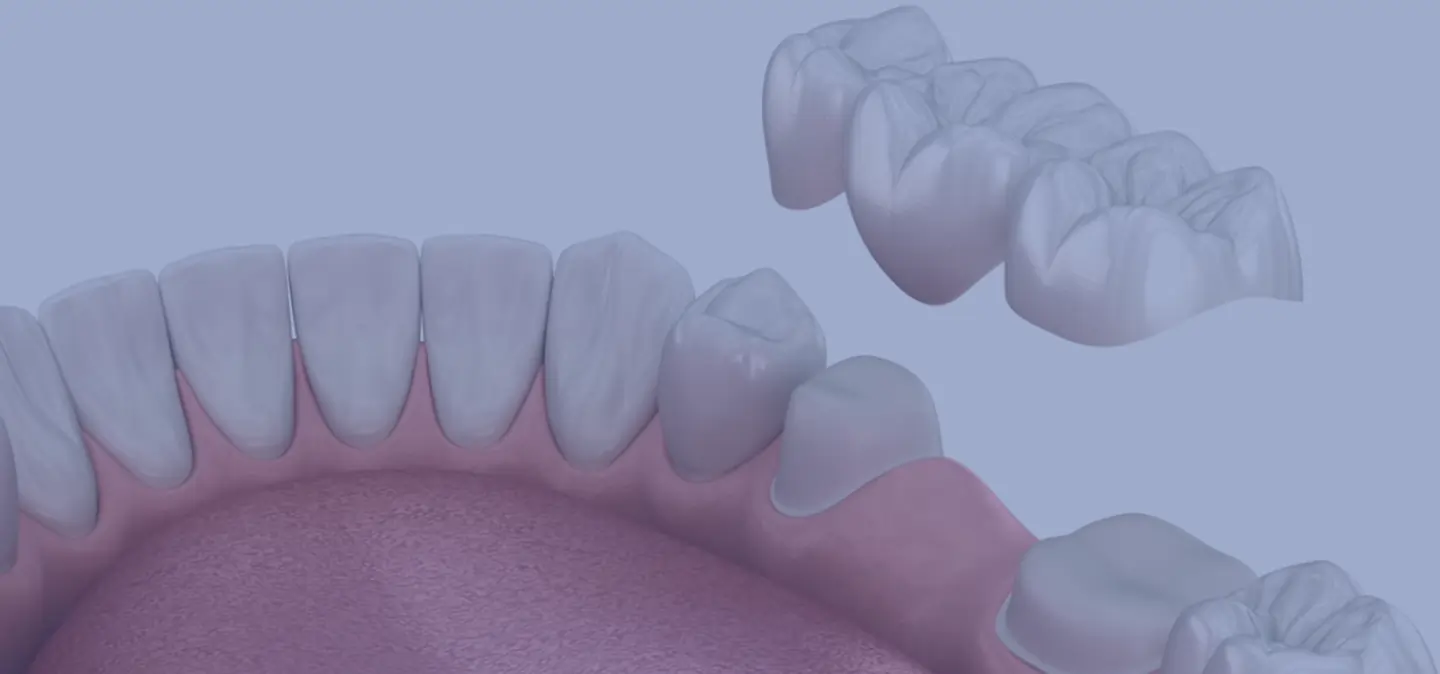
A dental bridge is a fixed dental restoration used to replace one or more missing teeth.
A bridge usually includes one or more artificial teeth held in place by crowns on nearby natural teeth. These supporting teeth are called abutment teeth. The artificial replacement tooth is called a pontic.
Unlike a removable denture, a traditional dental bridge stays fixed in place. It is designed to help restore chewing function, support speech, and improve the appearance of the missing tooth area.
What Do Dental Bridges Help With?
Missing teeth can affect more than smile appearance. A gap can change how you chew, how your bite feels, and how nearby teeth move over time.
A dental bridge may help:
- ✓Replace one or more missing teeth
- ✓Fill a visible gap in your smile
- ✓Improve chewing comfort
- ✓Support clearer speech
- ✓Help maintain bite balance
- ✓Reduce shifting of nearby teeth
- ✓Support facial and smile appearance
- ✓Provide a fixed alternative to a removable partial denture
A dental exam is needed to confirm whether a bridge is the right option for your mouth.
Who May Need a Dental Bridge?
A dental bridge may be suitable for patients who have one or more missing teeth and healthy nearby teeth that can support the bridge.
You may be a bridge candidate if:
- ✓You are missing one tooth
- ✓You are missing several teeth in a row
- ✓You want a fixed replacement option
- ✓Nearby teeth are strong enough to support a bridge
- ✓Your gums and bite are healthy enough for treatment
- ✓You want to improve chewing or speech after tooth loss
- ✓You want to fill a missing tooth space without a removable denture
Not every patient is a good candidate for a bridge. Your dentist will check the surrounding teeth, gums, bone support, and bite before recommending treatment.
Types of Dental Bridges
The right type of bridge depends on the missing tooth area, condition of nearby teeth, bite pressure, and clinical needs.
Traditional Dental Bridge
A traditional bridge uses crowns on nearby teeth to support the replacement tooth. This is one of the most common bridge types.
Cantilever Bridge
A cantilever bridge may be supported by one nearby tooth in selected cases. It is not suitable for every area of the mouth because bite pressure matters.
Maryland Bridge
A Maryland bridge may use a bonded framework behind nearby teeth instead of full crowns. Suitability depends on the tooth location, bite, and clinical situation.
Your dentist will explain which option, if any, may be suitable after examining your mouth.
What to Expect During Dental Bridge Treatment
Missing Tooth Assessment
The dentist checks the missing tooth area, nearby teeth, gums, bite, and dental history.
X-Rays When Needed
X-rays may be recommended to check the supporting teeth, roots, and bone around the missing tooth area.
Bridge Planning
Your dentist explains whether a bridge is suitable and what type of bridge may work for your situation.
Tooth Preparation
For a traditional bridge, the supporting teeth may need to be shaped so crowns can fit over them.
Impression or Digital Scan
An impression or scan may be taken so the bridge can be made to fit your teeth and bite.
Temporary Bridge
A temporary bridge may be placed while the final bridge is being made.
Final Bridge Placement
At a later visit, the bridge is checked for fit, bite comfort, and appearance before being secured.
Dental Bridge vs Denture
A dental bridge is fixed in place and usually supported by nearby teeth. It is not removed daily by the patient.
A denture is removable and may replace several teeth or a full arch of teeth.
A bridge may feel more stable for some patients, but it requires suitable supporting teeth. A denture may be better when several teeth are missing or when nearby teeth are not suitable for bridge support.
Your dentist will explain which option fits your mouth, health, and goals.
Can a Bridge Replace One Missing Tooth?
Yes. A dental bridge can often replace one missing tooth if the nearby teeth and bite are suitable.
A single-tooth bridge fills the gap with an artificial tooth supported by the teeth beside it. The dentist must check whether those nearby teeth are strong enough and whether a bridge is the best option for the area.
Can a Bridge Replace Several Missing Teeth?
A bridge may replace several missing teeth in a row, but the number of missing teeth, bite pressure, and strength of supporting teeth matter.
If too many teeth are missing or the supporting teeth are not strong enough, your dentist may discuss other options such as partial dentures.
How to Care for a Dental Bridge
A bridge needs daily cleaning because plaque and food can collect around and under it.
To help protect your bridge:
- ✓Brush twice daily
- ✓Clean around the bridge every day
- ✓Use floss threaders, interdental brushes, or tools recommended by your dental team
- ✓Keep up with dental exams
- ✓Book regular dental cleanings
- ✓Avoid chewing very hard objects
- ✓Call if the bridge feels loose, high, painful, or traps food
- ✓Wear a night guard if you grind or clench and your dentist recommends one
Good care helps protect both the bridge and the supporting teeth.
How Long Do Dental Bridges Last?
Dental bridges can last for years, but their lifespan depends on oral hygiene, bite pressure, supporting teeth, gum health, bridge material, and whether you grind or clench.
The bridge itself can be strong, but the supporting teeth still need protection from decay and gum problems. Regular exams help your dentist check the bridge before small issues become larger.
Cost and CDCP Information
The cost of a dental bridge depends on the number of missing teeth, number of supporting teeth, material, X-rays if needed, treatment complexity, and your coverage.
Grimsby Lake Dental accepts CDCP for eligible patients and eligible dental services. CDCP coverage for bridges depends on eligibility, treatment need, preauthorization rules, co-payments, frequency limits, and plan rules.
If you have private insurance, CDCP, or another dental benefit, bring your coverage information to your visit so our team can help review estimated costs before treatment begins.
Related Services
Good to know
Frequently Asked Questions
What is a dental bridge?+
A dental bridge is a fixed restoration that replaces one or more missing teeth using nearby teeth for support.
What is a dental bridge used for?+
A bridge is used to fill a missing tooth gap, support chewing, improve speech, maintain bite function, and improve smile appearance.
Can a bridge replace one missing tooth?+
Yes. A bridge may replace one missing tooth if the nearby teeth and bite are suitable.
Can a bridge replace several missing teeth?+
Sometimes. A bridge may replace several missing teeth in a row, but the dentist must check the supporting teeth, bite pressure, and gum health.
Is a bridge removable?+
A traditional dental bridge is fixed in place and is not removed daily. Dentures are removable.
What is the difference between a bridge and a denture?+
A bridge is fixed and usually supported by nearby teeth. A denture is removable and may replace several teeth or a full arch.
How do I clean under a dental bridge?+
You may need floss threaders, interdental brushes, or other cleaning tools to clean under and around the bridge. Your dental team can show you how.
How long does a dental bridge last?+
Dental bridges can last for years, but lifespan depends on oral hygiene, gum health, bite pressure, supporting teeth, material, and regular dental care.
Does CDCP cover dental bridges?+
CDCP may help cover eligible bridge-related services in eligible cases. Coverage depends on eligibility, treatment need, preauthorization, co-payments, frequency limits, and plan rules.
Do you accept new patients for dental bridges?+
Yes. Grimsby Lake Dental welcomes new patients who want to ask about replacing missing teeth with a dental bridge.
Where is Grimsby Lake Dental located?+
Grimsby Lake Dental is located at 414 Winston Rd, Grimsby, ON L3M 0H2, near Lake Ontario and the QEW.
Book Dental Bridges in Grimsby
Missing one or more teeth and want to ask about a fixed bridge? Book a dental bridge assessment at Grimsby Lake Dental.