
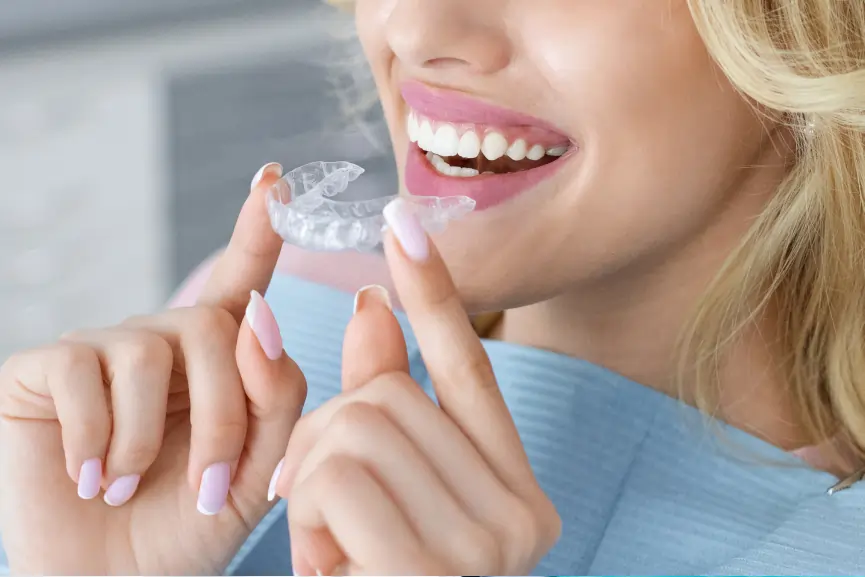
What Is Invisalign?
Invisalign is a clear aligner system used to straighten teeth without traditional brackets and wires.
Instead of fixed braces, Invisalign treatment uses a planned series of clear plastic aligners. Each aligner is shaped slightly differently to guide tooth movement step by step.
Invisalign is orthodontic treatment. It may improve tooth alignment, spacing, crowding, and selected bite concerns when the case is suitable. It is not only a cosmetic tray, and it is not suitable for every orthodontic problem.
What Can Invisalign Help With?
Invisalign may help with selected mild to moderate alignment concerns.
Invisalign may be used for:
- ✓Crowded teeth
- ✓Small gaps between teeth
- ✓Shifted teeth after braces
- ✓Mildly rotated teeth
- ✓Uneven tooth spacing
- ✓Selected overbite concerns
- ✓Selected underbite concerns
- ✓Selected crossbite concerns
- ✓Selected open bite concerns
- ✓Smile alignment concerns
A consultation is needed because some cases require traditional braces, specialist orthodontic care, extractions, or more complex treatment planning.
Who May Be a Good Candidate for Invisalign?
Invisalign may be suitable for patients who want a discreet, removable orthodontic option and can wear aligners consistently.
You may be a candidate if:
- ✓Your teeth and gums are healthy
- ✓You have mild to moderate crowding or spacing
- ✓Your bite concern is suitable for aligners
- ✓You can wear aligners as instructed every day
- ✓You can remove aligners before meals
- ✓You can brush and floss before reinserting aligners
- ✓You want a less noticeable alternative to braces
- ✓You understand that treatment requires discipline
Invisalign works only when the aligners are worn properly. Poor wear time can delay treatment or affect results.
When Invisalign May Not Be Suitable
Invisalign is effective for many patients, but it has limits.
Invisalign may not be recommended if you have:
- ✓Severe crowding
- ✓Severe bite problems
- ✓Advanced gum disease
- ✓Untreated cavities
- ✓Poor oral hygiene
- ✓Active tooth pain or infection
- ✓Complex jaw alignment concerns
- ✓Teeth needing major restorative work first
- ✓Tooth movement beyond aligner limits
- ✓Difficulty wearing removable appliances consistently
Your dentist may recommend treating cavities, gum disease, or other dental concerns before starting Invisalign.
Invisalign for Crowded Teeth
Crowded teeth happen when there is not enough space for teeth to sit evenly.
Invisalign may help move mildly or moderately crowded teeth into better positions. The dentist checks how much crowding exists, whether space can be created safely, and whether the planned tooth movements are predictable with aligners.
Crowded teeth can also be harder to clean because plaque may collect in tight areas. Improving alignment may make cleaning easier in selected cases.
Invisalign for Gaps Between Teeth
Invisalign may help close small or moderate gaps between teeth by guiding teeth closer together.
Before treatment, the dentist checks why the gaps exist. Spacing may be related to tooth size, missing teeth, gum support, bite forces, habits, or previous tooth movement.
If spacing is caused by tooth-size imbalance, cosmetic bonding, veneers, retainers, or other treatment may be discussed after Invisalign.
Invisalign for Teeth That Shifted After Braces
Teeth can move after braces if retainers were not worn consistently or if bite forces changed.
Invisalign may help patients who had braces before and now have minor relapse, crowding, or gaps. A consultation helps determine whether the teeth can be corrected with Invisalign or whether another orthodontic plan is needed.
Invisalign for Bite Concerns
Invisalign can help with selected bite concerns, but it does not treat every bite problem.
Bite concerns may include:
- ✓Overbite
- ✓Underbite
- ✓Crossbite
- ✓Open bite
- ✓Deep bite
- ✓Uneven bite pressure
- ✓Edge-to-edge bite
Your dentist checks how your upper and lower teeth meet, whether tooth movement alone can improve the bite, and whether an orthodontic referral is more appropriate.
How Invisalign Treatment Works
1. Invisalign Consultation
Your dentist checks your teeth, gums, bite, jaw relationship, oral health, previous dental work, and treatment goals.
2. X-Rays, Photos, or Records When Needed
Records may be recommended to check tooth roots, bone support, spacing, bite, and treatment suitability.
3. Digital Scan or Impression
A scan or impression is taken to plan the aligner trays and proposed tooth movements.
4. Treatment Plan Review
Your dentist explains the expected tooth movements, estimated treatment time, limitations, fees, and responsibilities.
5. Custom Invisalign Aligners
A series of Invisalign aligners is made to gradually move your teeth.
6. Aligner Wear
You wear each aligner set as instructed. Aligners are removed for eating, drinking anything other than water, brushing, and flossing.
7. Progress Checks
Follow-up visits help check aligner fit, tooth movement, tracking, oral hygiene, and whether refinements are needed.
8. Refinements When Needed
Some patients need additional aligners to improve final tooth positioning.
9. Retainers After Invisalign
After Invisalign treatment, retainers are usually needed to help keep teeth from shifting back.
How Many Hours Per Day Should Invisalign Be Worn?
Invisalign aligners must be worn consistently for treatment to work.
Most patients are instructed to wear aligners for most of the day and night, removing them only for eating, drinking anything other than water, brushing, and flossing.
If aligners are not worn as instructed, teeth may not move as planned. Later trays may stop fitting, treatment may take longer, and refinements may be needed.
Eating and Drinking with Invisalign
Invisalign aligners should usually be removed before eating.
During Invisalign treatment:
- ✓Remove aligners before meals
- ✓Drink water while aligners are in
- ✓Avoid coffee, tea, juice, and sugary drinks with aligners in
- ✓Brush or rinse before putting aligners back
- ✓Store aligners in their case
- ✓Do not wrap aligners in tissue or napkins
- ✓Avoid hot water because it can warp the trays
Eating with aligners can damage them. Drinking sugary or coloured drinks with aligners can stain trays and increase cavity risk.
Cleaning Invisalign Aligners
Invisalign aligners need daily cleaning.
Aligner care tips:
- ✓Rinse aligners after removing them
- ✓Brush aligners gently as instructed
- ✓Brush and floss before reinserting aligners
- ✓Keep aligners in their case when not wearing them
- ✓Do not use hot water
- ✓Avoid coloured mouthwash that may stain trays
- ✓Bring aligners to follow-up visits when asked
- ✓Call if an aligner cracks, warps, or stops fitting
Clean aligners help reduce odour, staining, plaque buildup, and gum irritation.
Invisalign Attachments
Some Invisalign cases require small tooth-coloured attachments.
Attachments are small shapes bonded to selected teeth. They help the aligners grip teeth and guide specific movements.
Not every patient needs attachments. If attachments are part of your treatment plan, your dentist will explain where they go, why they are needed, and how to clean around them.
Does Invisalign Hurt?
Invisalign should not cause severe pain, but pressure and tightness are common when starting a new aligner.
This pressure usually means the aligner is guiding tooth movement. Mild soreness may happen for a short time after switching trays.
Call the clinic if an aligner causes sharp pain, cuts your gums, does not fit properly, or if tooth pain does not settle.
Invisalign vs Braces
Invisalign and braces both move teeth, but they are different treatment systems.
Invisalign aligners are removable and less noticeable. They require strong patient discipline because they only work when worn consistently.
Braces are fixed to the teeth and may be better for complex tooth movements, more severe bite problems, or patients who may not wear removable trays reliably.
Your dentist can explain whether Invisalign is realistic or whether an orthodontic referral may be better.
Invisalign vs Generic Clear Aligners
Invisalign is a specific clear aligner brand and treatment system.
Generic clear aligners also use removable trays to move teeth, but the planning system, materials, provider workflow, software, monitoring, and case options may differ.
If the clinic offers both Invisalign and other clear aligner options, your dentist can explain the difference and recommend which option fits your case.
Invisalign vs Veneers or Bonding
Invisalign moves teeth into better positions.
Veneers and bonding change tooth appearance by altering shape, colour, size, or small spaces, but they do not move teeth.
If the main issue is crowding, gaps, or bite alignment, Invisalign may be more appropriate. If the issue is tooth shape, chips, or colour, bonding, veneers, or whitening may be considered.
Sometimes cosmetic treatment is planned after Invisalign once the teeth are in better positions.
Retainers After Invisalign
Retainers are usually needed after Invisalign treatment.
Teeth can shift after orthodontic treatment if retainers are not worn as instructed. Retainers help maintain the new tooth positions while the bone and tissues stabilize.
Your dentist will explain what type of retainer may be recommended and how often to wear it.
Cost and Coverage Information
The cost of Invisalign depends on case complexity, records, treatment length, number of aligners, refinements, retainers, and follow-up visits.
Invisalign is often considered orthodontic or cosmetic depending on the case and insurance plan. Private insurance coverage varies.
CDCP coverage for orthodontic treatment may be limited and depends on program rules, eligibility, treatment type, and whether the service is covered in your case. Cosmetic alignment may not be covered.
Bring your private insurance, CDCP, or benefit information to your consultation so our team can help review estimated costs before treatment begins.
Related Services
Good to know
Frequently Asked Questions
What is Invisalign?+
Invisalign is a clear aligner system that uses a series of removable trays to gradually move teeth into better positions.
What can Invisalign fix?+
Invisalign may help with mild to moderate crowding, gaps, shifted teeth, rotated teeth, and selected bite concerns.
Is Invisalign the same as clear aligners?+
Invisalign is a specific brand of clear aligners. Clear aligners is the broader treatment category.
Is Invisalign better than braces?+
It depends on the case. Invisalign is removable and less noticeable, but braces may be better for complex tooth movements or severe bite problems.
How many hours a day do I wear Invisalign?+
Most patients need to wear Invisalign for most of the day and night, removing aligners only for eating, brushing, flossing, and drinking anything other than water.
Can I eat with Invisalign?+
No. Invisalign aligners should usually be removed before eating to avoid damage, staining, and trapped food.
Can I drink coffee with Invisalign?+
It is better to remove aligners before drinking coffee, tea, juice, or sugary drinks because they can stain trays and increase cavity risk.
Does Invisalign hurt?+
Invisalign may cause mild pressure or tightness when starting a new tray. Severe pain, poor fit, or gum cuts should be checked.
How long does Invisalign treatment take?+
Treatment time depends on crowding, spacing, bite concerns, tooth movement needed, and how consistently aligners are worn.
Will I need attachments with Invisalign?+
Some patients need small tooth-coloured attachments to help aligners grip teeth and guide movement.
Do I need retainers after Invisalign?+
Yes. Retainers are usually needed after Invisalign treatment to help prevent teeth from shifting back.
Is Invisalign covered by insurance or CDCP?+
Private insurance coverage varies. CDCP coverage for orthodontic or cosmetic alignment may be limited and depends on eligibility, treatment type, and plan rules.
Do you accept new patients for Invisalign?+
Yes. Grimsby Lake Dental welcomes new patients who want to ask about Invisalign treatment.
Where is Grimsby Lake Dental located?+
Grimsby Lake Dental is located at 414 Winston Rd, Grimsby, ON L3M 0H2, near Lake Ontario and the QEW.
Book an Invisalign Consultation in Grimsby
Want straighter teeth with clear, removable aligners? Book an Invisalign consultation at Grimsby Lake Dental to find out whether Invisalign is suitable for your teeth, bite, and smile goals.