What Are Dentures?
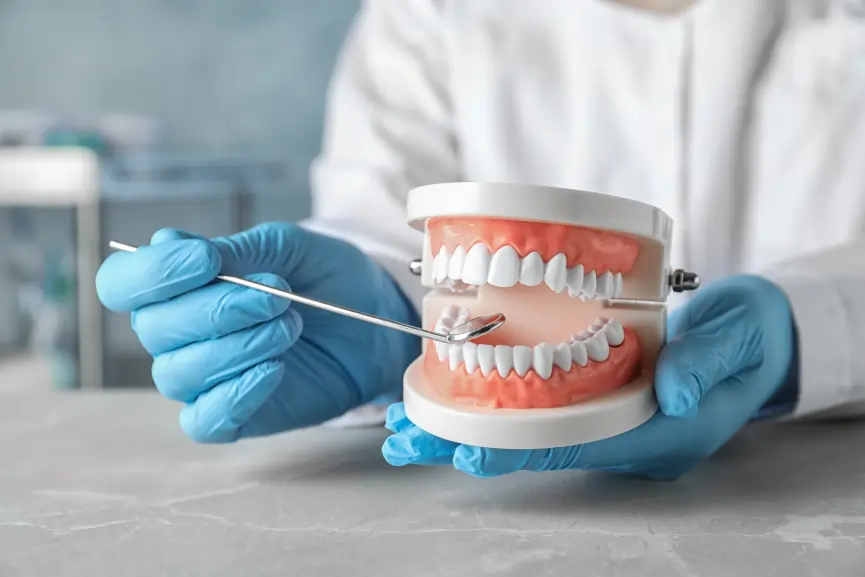
Dentures are removable dental appliances that replace missing teeth and surrounding gum-shaped areas.
They may replace all teeth in one arch or only some missing teeth. Dentures can help improve chewing, speaking, facial support, and smile appearance after tooth loss.
Dentures do not work exactly like natural teeth, and they can take time to get used to. A properly planned denture should be designed for your mouth, bite, gums, and remaining teeth.
Types of Dentures
Full Dentures
Full dentures replace all teeth in the upper jaw, lower jaw, or both. They rest on the gums and are designed to restore a full arch of missing teeth.
Full dentures may be recommended when all natural teeth in an arch are missing or need replacement.
Partial Dentures
Partial dentures replace several missing teeth while fitting around the natural teeth you still have.
A partial denture can help fill spaces, support chewing, and reduce some movement of nearby teeth into empty gaps.
Immediate Dentures
Immediate dentures may be placed soon after teeth are removed in selected cases. They help patients avoid being without teeth during the early healing period.
Immediate dentures often need adjustments after healing because the gums and bone can change shape.
Replacement Dentures
Existing dentures may need replacement if they are worn, loose, uncomfortable, cracked, or no longer support your bite properly.
Your dentist can assess whether adjustment, reline, repair, or replacement may be needed.
Who May Need Dentures?
Dentures may be suitable for patients who are missing several teeth or all teeth in one or both jaws.
You may want to ask about dentures if you have:
- ✓Several missing teeth
- ✓All teeth missing in the upper or lower jaw
- ✓Difficulty chewing because of missing teeth
- ✓Speech changes from tooth loss
- ✓Loose or uncomfortable existing dentures
- ✓A partial denture that no longer fits well
- ✓Teeth that may not be restorable
- ✓Gaps that affect your smile or bite
- ✓A need for a removable tooth replacement option
Not every patient needs dentures. Your dentist will check your oral health and explain the options that fit your situation.
What Dentures Can Help With
Missing teeth can affect daily life beyond appearance. Dentures may help restore basic function and confidence.
Dentures may help:
- ✓Replace missing teeth
- ✓Improve chewing ability
- ✓Support clearer speech
- ✓Restore smile appearance
- ✓Support facial shape after tooth loss
- ✓Fill gaps caused by missing teeth
- ✓Improve bite balance in selected cases
- ✓Provide a removable option for tooth replacement
Dentures require practice, adjustments, and daily care. Your dental team will explain what to expect.
Dentures vs Dental Bridges
Dentures and dental bridges both replace missing teeth, but they work differently.
A denture is removable and may replace several teeth or a full arch of teeth.
A dental bridge is fixed in place and usually uses nearby teeth for support.
Dentures may be more suitable when several teeth are missing or when a fixed bridge is not the right option. A bridge may be suitable when one or a few teeth are missing and the nearby teeth can support it.
Your dentist will explain which option may fit your mouth, bite, oral health, and goals.
What to Expect During a Denture Visit
Oral Health Assessment
The dentist checks your gums, remaining teeth, bite, jaw relationship, existing dentures if you have them, and overall oral health.
X-Rays When Needed
X-rays may be recommended to check remaining teeth, roots, bone support, or treatment needs before planning dentures.
Denture Planning
We explain whether full dentures, partial dentures, replacement dentures, or another option may be suitable.
Impressions or Scans
Impressions or scans may be taken so the denture can be made to fit your mouth.
Bite and Fit Records
Your bite and jaw position may be recorded to help plan how the denture teeth should meet.
Try-In or Fit Check
A try-in or fit check may be used to review appearance, bite, comfort, and tooth position before finalizing the denture.
Final Placement and Adjustments
When the denture is ready, the fit and bite are checked. Adjustments may be needed as your mouth adapts.
Getting Used to New Dentures
New dentures can take time to feel normal. It is common to need practice with speaking, chewing, and daily wear.
During the adjustment period, you may notice:
- ✓Increased saliva at first
- ✓Mild sore spots
- ✓Changes in speech
- ✓Difficulty chewing certain foods
- ✓A feeling of fullness in the mouth
- ✓Need for follow-up adjustments
Start with softer foods, chew slowly, and follow your dentist’s instructions. Call the clinic if the denture causes ongoing sore spots, pain, looseness, or difficulty eating.
Loose or Uncomfortable Dentures
Dentures can become loose over time because the gums and bone under the denture may change shape.
A denture assessment may be needed if:
- ✓Your denture feels loose
- ✓Food collects under the denture
- ✓You have sore spots
- ✓The denture clicks when speaking
- ✓Chewing feels unstable
- ✓Your bite feels uneven
- ✓The denture is cracked or worn
- ✓You avoid eating because of denture discomfort
Do not keep wearing a painful denture without having it checked. Adjustments or replacement may be needed.
How to Care for Dentures
Dentures need daily cleaning and careful handling.
Denture care tips:
- ✓Remove and clean dentures daily
- ✓Brush the gums, tongue, and remaining teeth
- ✓Rinse dentures after meals when possible
- ✓Handle dentures over a towel or sink of water
- ✓Store dentures as instructed when not wearing them
- ✓Avoid using hot water that may distort the denture
- ✓Do not sleep in dentures unless your dentist advises it
- ✓Keep regular dental exams to check fit and oral tissues
Good care helps protect your dentures, gums, and remaining teeth.
Cost and CDCP Information
The cost of dentures depends on the type of denture, number of teeth being replaced, materials, appointments needed, extractions if required, adjustments, and your coverage.
Grimsby Lake Dental accepts CDCP for eligible patients and eligible denture-related services. CDCP coverage depends on eligibility, treatment need, preauthorization rules, co-payments, frequency limits, and plan rules.
If you have private insurance, CDCP, or another dental benefit, bring your coverage information to your visit so our team can help review estimated costs before treatment begins.
Related Services
Good to know
Frequently Asked Questions
What are dentures?+
Dentures are removable dental appliances that replace missing teeth in the upper jaw, lower jaw, or both.
What is the difference between full and partial dentures?+
Full dentures replace all teeth in an arch. Partial dentures replace several missing teeth while fitting around the natural teeth you still have.
Are dentures removable?+
Yes. Traditional full and partial dentures are removable and should be cleaned daily.
How long does it take to get used to dentures?+
Many patients need time to adjust to speaking, chewing, and wearing dentures. Follow-up adjustments may be needed for comfort and fit.
Can dentures help me chew better?+
Dentures may improve chewing ability after tooth loss, but they do not feel exactly like natural teeth. Practice and fit adjustments can help.
Why do dentures become loose?+
Dentures can become loose because the gums and bone under them change shape over time. A dentist can check whether adjustment, reline, repair, or replacement may be needed.
How do I clean dentures?+
Remove and clean dentures daily, brush your gums and remaining teeth, and follow your dentist’s instructions for storage and care.
Should I sleep with my dentures in?+
Many patients are advised to remove dentures while sleeping so the gums can rest, but follow your dentist’s specific instructions.
Does CDCP cover dentures?+
CDCP may help cover eligible denture-related services in eligible cases. Coverage depends on eligibility, treatment need, preauthorization, co-payments, frequency limits, and plan rules.
Do you accept new patients for dentures?+
Yes. Grimsby Lake Dental welcomes new patients who want to ask about full dentures, partial dentures, or denture fit concerns.
Where is Grimsby Lake Dental located?+
Grimsby Lake Dental is located at 414 Winston Rd, Grimsby, ON L3M 0H2, near Lake Ontario and the QEW.
Book Dentures in Grimsby
Missing several teeth, struggling with loose dentures, or looking for a removable tooth replacement option? Book a denture assessment at Grimsby Lake Dental.