
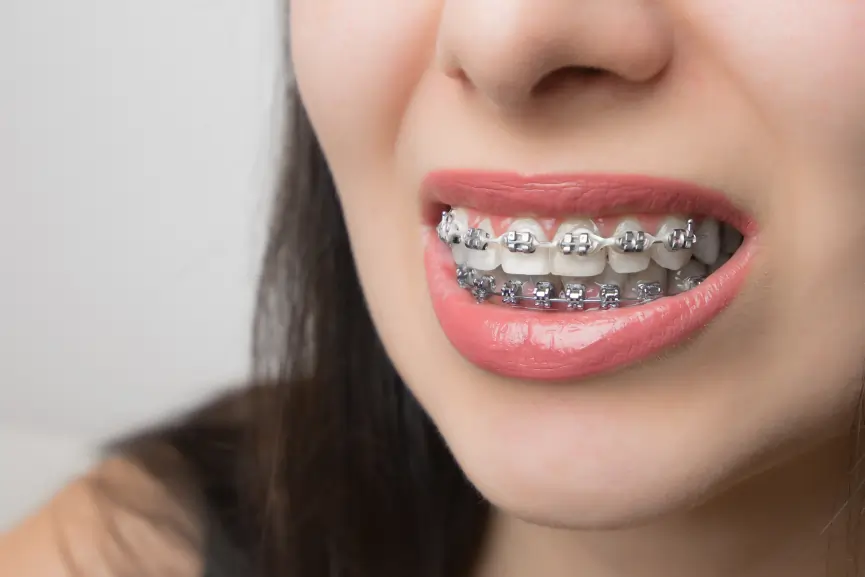
What Are Clear Braces?
Clear braces are fixed orthodontic braces that use ceramic or tooth-coloured brackets instead of standard metal brackets.
They work in a similar way to traditional braces. Brackets are attached to the teeth, and a wire applies controlled pressure to guide teeth into better positions over time.
Clear braces are different from clear aligners. Clear braces are fixed to the teeth and cannot be removed by the patient. Clear aligners are removable trays.
Clear braces may be a good option for patients who want braces treatment but prefer a less noticeable look than metal braces.
What Can Clear Braces Help With?
Clear braces may help with tooth and bite alignment concerns.
Clear braces may be used for:
- ✓Crowded teeth
- ✓Gaps between teeth
- ✓Rotated teeth
- ✓Crooked front teeth
- ✓Teeth that have shifted after past orthodontic treatment
- ✓Selected overbite concerns
- ✓Selected underbite concerns
- ✓Selected crossbite concerns
- ✓Selected open bite concerns
- ✓Uneven bite pressure
- ✓Smile alignment concerns
Not every case can be treated with clear braces at a general dental clinic. Some patients may need specialist orthodontic care depending on case complexity.
Who May Be a Good Candidate for Clear Braces?
Clear braces may be suitable for patients who want fixed orthodontic treatment with a less visible appearance.
You may be a candidate if:
- ✓Your teeth and gums are healthy
- ✓You have crowding or spacing concerns
- ✓You want a fixed option instead of removable aligners
- ✓You prefer tooth-coloured brackets over metal brackets
- ✓You can attend adjustment visits
- ✓You can follow food restrictions during treatment
- ✓You can clean carefully around brackets and wires
- ✓Your bite concern is suitable for braces treatment
A consultation is needed because clear braces must be planned around your teeth, gums, bite, oral hygiene, and treatment goals.
When Clear Braces May Not Be Suitable
Clear braces are useful, but they are not the right choice for every patient.
Clear braces may not be recommended if you have:
- ✓Active cavities
- ✓Advanced gum disease
- ✓Poor oral hygiene
- ✓Severe jaw alignment concerns
- ✓Untreated dental pain or infection
- ✓Teeth needing major restorative work first
- ✓Heavy grinding or clenching without protection
- ✓A bite problem requiring specialist orthodontic treatment
- ✓Difficulty avoiding hard, sticky, or chewy foods
- ✓Difficulty cleaning around brackets and wires
Your dentist may recommend dental cleaning, fillings, gum care, or other treatment before starting braces.
Clear Braces for Crowded Teeth
Crowded teeth happen when there is not enough space for teeth to sit evenly.
Clear braces may help move crowded teeth into better positions by applying controlled pressure through brackets and wires. The dentist checks how much crowding is present, whether space can be created safely, and whether the tooth movements are suitable for clear braces.
Crowded teeth can also be harder to clean because plaque may collect in tight areas. Improving alignment may help make daily brushing and flossing easier after treatment.
Clear Braces for Gaps Between Teeth
Clear braces may help close gaps between teeth by gradually moving teeth into better positions.
Before recommending braces, the dentist checks why the gaps exist. Spacing may be related to tooth size, missing teeth, gum support, habits, bite pressure, or previous orthodontic movement.
If gaps are caused by tooth-size differences, additional cosmetic treatment such as bonding or veneers may be discussed after alignment.
Clear Braces for Bite Concerns
Clear braces may help with selected bite alignment problems.
Bite concerns may include:
- ✓Overbite
- ✓Underbite
- ✓Crossbite
- ✓Open bite
- ✓Deep bite
- ✓Edge-to-edge bite
- ✓Uneven bite pressure
The dentist checks how your upper and lower teeth meet and whether clear braces can manage the case. More complex bite problems may need referral to an orthodontist.
How Clear Braces Work
Clear braces move teeth using fixed brackets and wires.
The process usually includes:
- 1Consultation
Your dentist checks your teeth, gums, bite, jaw relationship, and treatment goals. - 2Records and X-rays When Needed
Photos, X-rays, scans, or impressions may be taken to assess tooth position and treatment suitability. - 3Treatment Planning
Your dentist explains whether clear braces are suitable, estimated treatment time, limitations, cost, and responsibilities. - 4Bracket Placement
Tooth-coloured brackets are bonded to selected teeth. - 5Wire Placement
A wire connects the brackets and begins guiding tooth movement. - 6Adjustment Visits
Regular visits are needed to adjust wires, check movement, and monitor oral hygiene. - 7Final Braces Removal
When treatment is complete, the braces are removed and the teeth are polished. - 8Retainers
Retainers are usually needed after braces to help prevent teeth from shifting back.
Clear Braces vs Metal Braces
Clear braces and metal braces work in a similar way. Both use brackets and wires to move teeth.
The main difference is appearance. Clear braces use tooth-coloured or ceramic brackets, making them less noticeable than metal brackets.
Clear braces may be preferred by patients who want:
- ✓A less visible braces option
- ✓Fixed orthodontic treatment
- ✓Tooth-coloured brackets
- ✓An option that does not depend on tray wear time
- ✓Braces instead of removable aligners
Metal braces may be more durable in some cases and may be recommended depending on bite pressure, tooth movement, or patient habits.
Clear Braces vs Clear Aligners
Clear braces and clear aligners are different.
Clear braces are fixed to the teeth. They are not removed for eating or brushing. They use brackets and wires to move teeth.
Clear aligners are removable trays. They must be worn consistently and removed for eating, brushing, and flossing.
Clear braces may be better if:
- ✓You do not want to manage removable trays
- ✓You may forget to wear aligners
- ✓You need fixed treatment
- ✓Your dentist believes brackets and wires are better for your case
Clear aligners may be better if:
- ✓You want removable trays
- ✓Your case is mild to moderate
- ✓You can wear trays as instructed
- ✓You want fewer food restrictions during treatment
Your dentist can explain which option fits your teeth, bite, habits, and goals.
Eating with Clear Braces
Clear braces stay on your teeth while you eat, so food choices matter.
During clear braces treatment, avoid:
- ✓Hard candies
- ✓Ice chewing
- ✓Sticky candies
- ✓Caramels
- ✓Chewy foods that pull on brackets
- ✓Hard nuts
- ✓Popcorn kernels
- ✓Biting directly into hard foods
- ✓Using teeth to open packaging
Hard or sticky foods can break brackets, bend wires, or delay treatment.
Cleaning Teeth with Clear Braces
Cleaning is more important during braces because plaque can collect around brackets and wires.
Braces cleaning tips:
- ✓Brush after meals when possible
- ✓Brush carefully around each bracket
- ✓Clean along the gumline
- ✓Use floss threaders or orthodontic floss tools
- ✓Ask about interdental brushes
- ✓Avoid frequent sugary snacks and drinks
- ✓Keep regular dental cleanings
- ✓Call if brackets or wires make cleaning difficult
Poor cleaning during braces can lead to white spots, cavities, swollen gums, bad breath, and gum inflammation.
Do Clear Braces Stain?
The ceramic brackets themselves are usually resistant to staining, but elastic ties around the brackets may stain over time.
Staining may be more noticeable with:
- ✓Coffee
- ✓Tea
- ✓Red wine
- ✓Curry
- ✓Tomato sauces
- ✓Tobacco exposure
- ✓Poor brushing around brackets
Your dental team can give cleaning advice and replace elastic ties during adjustment visits when appropriate.
Do Clear Braces Hurt?
Clear braces can cause pressure or soreness after placement and adjustments.
This pressure happens because the braces are moving teeth. Mild soreness usually improves as your mouth adjusts.
Call the clinic if you have sharp pain, a broken bracket, a poking wire, swelling, or discomfort that does not settle.
How Long Do Clear Braces Take?
Clear braces treatment time depends on how much tooth movement is needed.
Treatment time may depend on:
- ✓Crowding severity
- ✓Spacing amount
- ✓Tooth rotations
- ✓Bite relationship
- ✓Gum and bone health
- ✓Broken brackets or missed visits
- ✓Oral hygiene during treatment
- ✓Whether refinements are needed
- ✓Whether specialist orthodontic care is required
Your dentist can give a more realistic timeline after examining your teeth.
Broken Bracket or Poking Wire
A broken bracket or poking wire should be checked.
Call the clinic if:
- ✓A bracket comes loose
- ✓A wire is poking your cheek or gum
- ✓A wire breaks
- ✓A band or elastic comes off
- ✓Braces feel sharp
- ✓You cannot chew comfortably
- ✓You have swelling or persistent pain
Do not try to cut wires yourself. Call the clinic for guidance.
Retainers After Clear Braces
Retainers are usually needed after clear braces.
Teeth can shift after braces if retainers are not worn as instructed. Retainers help hold teeth in their new positions while the bone and tissues stabilize.
Your dentist will explain what type of retainer may be recommended and how often to wear it.
Cost and Coverage Information
The cost of clear braces depends on case complexity, records, treatment length, adjustment visits, retainers, and whether specialist care is needed.
Clear braces are usually considered orthodontic treatment. Private insurance coverage varies.
CDCP coverage for orthodontic treatment may be limited and depends on eligibility, treatment type, program rules, and whether the service is covered in your case. Cosmetic alignment may not be covered.
Bring your private insurance, CDCP, or benefit information to your consultation so our team can help review estimated costs before treatment begins.
Related Services
Good to know
Frequently Asked Questions
What are clear braces?+
Clear braces are fixed braces that use tooth-coloured or ceramic brackets instead of traditional metal brackets.
Are clear braces the same as clear aligners?+
No. Clear braces are fixed to the teeth and use brackets and wires. Clear aligners are removable trays.
Do clear braces work like metal braces?+
Yes. Clear braces work similarly to metal braces by using brackets and wires to move teeth gradually.
Are clear braces less noticeable than metal braces?+
Yes. Clear braces use tooth-coloured or ceramic brackets, so they are usually less noticeable than metal braces.
Can clear braces fix crowded teeth?+
Clear braces may help with crowded teeth, depending on the severity of crowding, bite, and oral health.
Can clear braces close gaps?+
Clear braces may help close gaps between teeth when the spacing concern is suitable for braces treatment.
Do clear braces stain?+
Ceramic brackets are usually resistant to staining, but elastic ties can stain from coffee, tea, sauces, tobacco exposure, or poor cleaning.
Can I eat normally with clear braces?+
You will need to avoid hard, sticky, and chewy foods that can break brackets or bend wires.
How do I clean around clear braces?+
Brush carefully around each bracket, clean along the gumline, and use floss threaders or interdental brushes as recommended.
Do clear braces hurt?+
Clear braces may cause pressure or soreness after placement and adjustments. Severe pain, broken brackets, or poking wires should be checked.
How long do clear braces take?+
Treatment time depends on crowding, spacing, bite, tooth movement needed, oral hygiene, and whether brackets break or visits are missed.
Are clear braces covered by insurance or CDCP?+
Private insurance coverage varies. CDCP coverage for orthodontic or cosmetic alignment may be limited and depends on eligibility, treatment type, and program rules.
Do you accept new patients for clear braces?+
Yes. Grimsby Lake Dental welcomes new patients who want to ask about clear braces and teeth straightening options.
Where is Grimsby Lake Dental located?+
Grimsby Lake Dental is located at 414 Winston Rd, Grimsby, ON L3M 0H2, near Lake Ontario and the QEW.
Book a Clear Braces Consultation in Grimsby
Want straighter teeth with a less noticeable fixed braces option? Book a clear braces consultation at Grimsby Lake Dental to find out whether clear braces are suitable for your teeth, bite, and smile goals.