What Is Dental Bonding?
Dental bonding is a treatment where tooth-coloured composite resin is applied to a tooth, shaped, hardened, and polished.
Bonding is often used for small cosmetic or minor repair concerns. It can improve the look of a chipped tooth, close a small space, smooth an uneven edge, or cover a small discoloured area.
Dental bonding is usually more conservative than treatments that require more tooth preparation. However, it is not the right choice for every tooth or every cosmetic concern.
What Can Dental Bonding Fix?
Dental bonding is best for smaller tooth changes.
Bonding may help with:
- ✓Small chipped teeth
- ✓Minor cracks
- ✓Uneven tooth edges
- ✓Small gaps between teeth
- ✓Worn tooth edges
- ✓Slight shape concerns
- ✓Small discoloured areas
- ✓Minor cosmetic defects
- ✓Small areas of exposed tooth structure
- ✓Selected front-tooth cosmetic concerns
Bonding is not usually recommended for large broken areas, severe bite problems, heavy grinding damage, or teeth that need stronger protection.
Who May Be a Good Candidate for Dental Bonding?
Dental bonding may be suitable if your teeth and gums are healthy and the cosmetic concern is small.
You may be a bonding candidate if:
- ✓You have a small chip on a front tooth
- ✓You want to close a small gap
- ✓You want to smooth an uneven edge
- ✓You have a minor shape concern
- ✓You want a tooth-coloured repair
- ✓The tooth does not need a crown or veneer
- ✓Your bite does not place heavy pressure on the area
- ✓You do not have active decay or gum disease in that area
A dental exam is important because bonding can chip or wear if the tooth is under heavy pressure.
When Dental Bonding May Not Be Suitable
Bonding is useful, but it has limits.
Bonding may not be the best option if you have:
- ✓Large tooth fractures
- ✓Deep cracks
- ✓Active cavities
- ✓Gum disease around the tooth
- ✓Heavy grinding or clenching
- ✓Severe tooth wear
- ✓Large spaces between teeth
- ✓Major tooth colour changes
- ✓A bite that places strong pressure on the bonded area
- ✓A tooth that needs a crown, veneer, or root canal assessment
Your dentist will explain whether bonding is realistic or whether another treatment may last better.
Dental Bonding for Chipped Teeth
Bonding is often used to repair small chips, especially on front teeth.
The dentist applies tooth-coloured resin to the chipped area, shapes it to match the tooth, hardens it, and polishes it. This can help restore the tooth’s appearance and smooth rough or sharp edges.
If the chip is large, painful, deep, or caused by a strong bite, bonding may not be enough. A crown, veneer, or other treatment may be recommended after assessment.
Dental Bonding for Small Gaps
Dental bonding may help close small spaces between teeth by adding composite resin to one or both teeth beside the gap.
This can improve the appearance of minor spacing without moving the teeth. However, bonding is not the same as orthodontic treatment. If the gap is large or related to tooth position, your dentist may discuss other options.
Dental Bonding for Uneven or Worn Edges
Small uneven edges can sometimes be improved with bonding.
The dentist can add and shape composite resin to create a smoother or more balanced tooth edge. This may be useful when teeth look slightly worn, chipped, or uneven.
If the wear is caused by grinding or clenching, your dentist may also recommend a night guard to protect the bonding and natural teeth.
Dental Bonding for Tooth Discolouration
Bonding may cover a small discoloured spot on a tooth, but it is not the same as teeth whitening.
Whitening changes the shade of natural teeth. Bonding covers a selected area with tooth-coloured resin.
If several teeth are discoloured or the full smile shade is the concern, teeth whitening or veneers may be discussed instead.
What to Expect During Dental Bonding
Tooth and Smile Assessment
The dentist checks the tooth, bite, gums, enamel, chip size, spacing, and cosmetic goal.
Shade Selection
A composite resin shade is selected to blend with your natural tooth colour.
Tooth Preparation
The tooth surface is prepared so the bonding material can attach properly. In many small cases, little tooth removal is needed.
Resin Placement
Tooth-coloured resin is applied to the tooth and shaped.
Hardening the Material
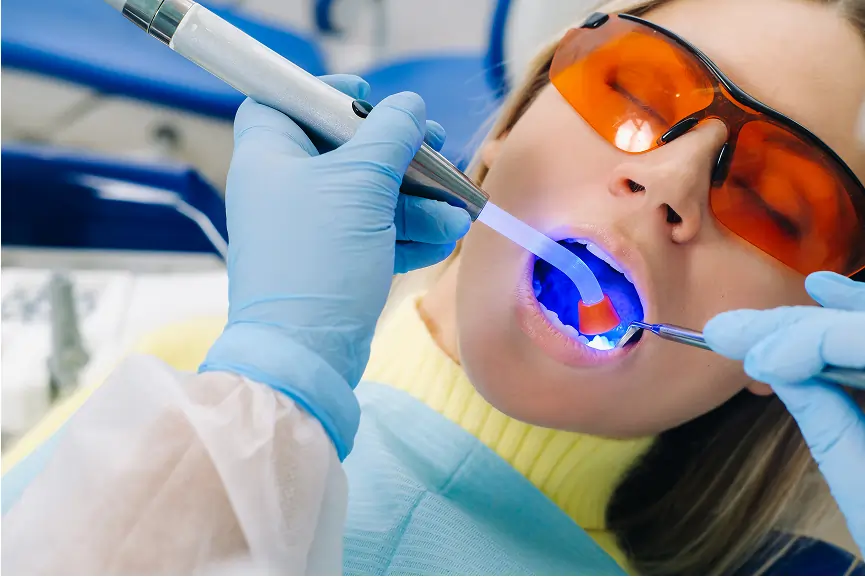
A curing light is used to harden the bonding material.
Shaping and Polishing
The bonded area is shaped, smoothed, and polished so it looks and feels more natural.
Bite Check
Your dentist checks your bite to reduce pressure on the bonding.
How Long Does Dental Bonding Last?
Dental bonding can last for years, but it is not as strong as natural enamel or some other restorations.
Bonding lifespan depends on:
- ✓Bite pressure
- ✓Tooth location
- ✓Grinding or clenching
- ✓Oral hygiene
- ✓Diet and staining habits
- ✓Size of the bonded area
- ✓Whether the bonding is on a biting edge
- ✓Regular dental exams and cleanings
Bonding may need repair, polishing, or replacement over time.
How to Care for Dental Bonding
Bonding needs daily care and protection from heavy forces.
To help protect bonded teeth:
- ✓Brush twice daily
- ✓Floss daily
- ✓Keep regular dental cleanings
- ✓Avoid biting nails or pens
- ✓Avoid chewing ice or very hard objects
- ✓Limit heavy staining foods and drinks
- ✓Do not use bonded teeth to open packaging
- ✓Wear a night guard if you grind or clench and your dentist recommends one
- ✓Call if bonding feels rough, loose, sharp, or chipped
Bonding can stain or chip over time, so routine monitoring matters.
Dental Bonding vs Veneers
Dental bonding is usually applied to a smaller area of the tooth. Veneers cover the front surface of the tooth.
Bonding may be suitable for small chips, small gaps, minor shape changes, and selected cosmetic repairs.
Veneers may be considered for broader cosmetic changes involving colour, shape, size, symmetry, or multiple front teeth.
Your dentist can explain which option fits your teeth, bite, goals, and budget.
Dental Bonding vs Dental Crowns
Bonding is used for smaller cosmetic repairs or minor damage.
A dental crown covers the tooth and is used when the tooth is cracked, weakened, heavily filled, or missing a larger amount of structure.
If the tooth needs strength and protection, bonding may not be enough.
Cost and Coverage Information
The cost of dental bonding depends on the number of teeth, size of the area, treatment purpose, materials, and your coverage.
Dental bonding may be considered cosmetic when it is done mainly to improve appearance. If bonding is needed to repair tooth damage, coverage may depend on your plan and the clinical reason.
CDCP coverage depends on eligibility, treatment type, frequency limits, co-payments, preauthorization, and plan rules. Cosmetic bonding may not be covered.
Bring your private insurance, CDCP, or benefit information to your visit so our team can help review estimated costs before treatment begins.
Related Services
Good to know
Frequently Asked Questions
What is dental bonding?+
Dental bonding is a treatment where tooth-coloured composite resin is applied to a tooth, shaped, hardened, and polished to repair or improve a small area.
What is dental bonding used for?+
Dental bonding may be used for small chips, minor cracks, uneven edges, small gaps, worn areas, and selected discoloured spots.
Is dental bonding good for chipped teeth?+
Yes, bonding may be suitable for small chipped teeth. Larger or deeper chips may need a crown, veneer, or another treatment.
Can bonding close a gap between teeth?+
Bonding may close small gaps between teeth. Larger spaces or spacing caused by tooth position may need a different approach.
Does bonding whiten teeth?+
No. Bonding does not whiten natural teeth. It uses tooth-coloured resin to cover or reshape selected areas.
Does bonding stain?+
Yes, bonding material can stain over time, especially with coffee, tea, red wine, tobacco exposure, or poor oral hygiene.
How long does dental bonding last?+
Dental bonding can last for years, but lifespan depends on bite pressure, tooth location, oral habits, grinding, and daily care.
Is dental bonding painful?+
Dental bonding is usually comfortable for small cosmetic repairs. Local freezing may not be needed in many cases, but this depends on the tooth and treatment area.
Is dental bonding covered by CDCP?+
CDCP coverage depends on eligibility, treatment reason, plan rules, and whether the service is considered eligible. Cosmetic bonding may not be covered.
Do you accept new patients for dental bonding?+
Yes. Grimsby Lake Dental welcomes new patients who want to ask about bonding for chips, small gaps, uneven edges, or minor cosmetic concerns.
Where is Grimsby Lake Dental located?+
Grimsby Lake Dental is located at 414 Winston Rd, Grimsby, ON L3M 0H2, near Lake Ontario and the QEW.
Book Dental Bonding in Grimsby
Have a chipped tooth, small gap, uneven edge, or minor cosmetic concern? Book a dental bonding consultation at Grimsby Lake Dental.