
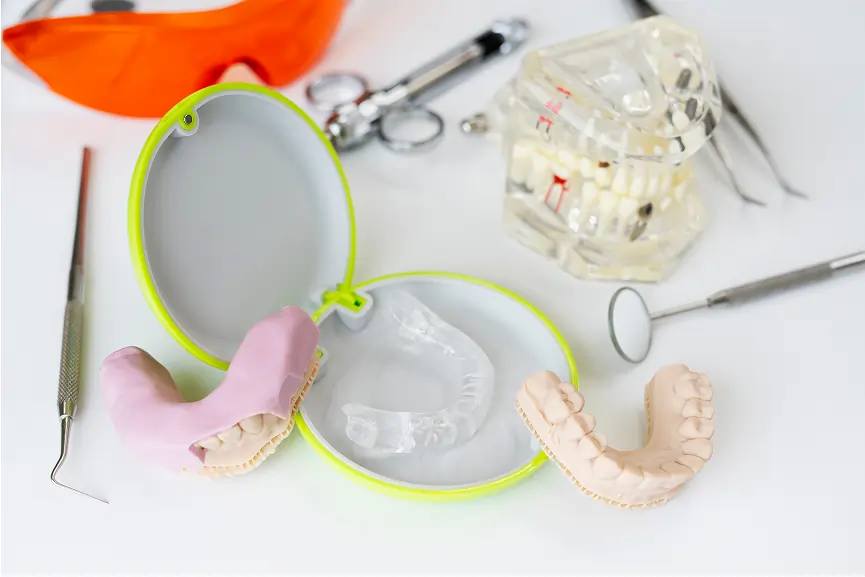
What Is a Night Guard?
A night guard is a custom dental appliance worn over the teeth during sleep to help protect them from grinding and clenching.
Teeth grinding and clenching are also called bruxism. Many people grind or clench without realizing it, especially while sleeping. Over time, this pressure can contribute to tooth wear, chipped teeth, cracked teeth, sore jaw muscles, headaches, and damage to fillings, crowns, or other dental work.
A night guard does not stop the habit itself. It creates a protective barrier between the upper and lower teeth and helps reduce direct tooth-to-tooth pressure while you sleep.
What Does a Night Guard Help With?
A night guard is mainly used to protect teeth from the effects of grinding and clenching.
A custom night guard may help with:
- ✓Tooth wear from grinding
- ✓Chipped or cracked teeth linked to clenching
- ✓Jaw muscle pressure during sleep
- ✓Morning jaw tightness
- ✓Pressure on crowns, fillings, veneers, or bridges
- ✓Tooth sensitivity from wear
- ✓Bite pressure while sleeping
- ✓Protecting teeth after repeated fractures or repairs
A night guard may be part of a protection plan, but your dentist still needs to check what is causing your symptoms.
Signs You May Need a Night Guard
You may not know you grind or clench your teeth. Often, the signs show up during a dental exam.
A dentist may recommend a night guard if you have:
- ✓Flattened or worn teeth
- ✓Chipped teeth
- ✓Cracked teeth
- ✓Repeated broken fillings
- ✓Tooth sensitivity from wear
- ✓Morning jaw soreness
- ✓Jaw tightness or tiredness
- ✓Headaches linked with clenching
- ✓Bite marks on the cheeks or tongue
- ✓A partner who notices grinding sounds at night
- ✓Crowns, bridges, or other dental work under heavy bite pressure
These signs do not automatically mean a night guard is the only answer, but they should be assessed.
What Causes Teeth Grinding or Clenching?
Teeth grinding and clenching can be linked to different factors. Sometimes there is more than one cause.
Possible contributing factors include:
- ✓Stress or tension
- ✓Sleep-related grinding
- ✓Bite pressure or uneven contact
- ✓Jaw muscle habits
- ✓Missing, worn, or misaligned teeth
- ✓Certain medications or medical factors
- ✓Caffeine, alcohol, or stimulant use in some patients
- ✓Sleep concerns that may need medical evaluation
Your dentist can assess tooth wear and bite pressure, but some sleep or medical factors may need help from a physician.
Custom Night Guard vs Store-Bought Night Guard
Store-bought night guards are usually one-size-fits-all or boil-and-bite. They may feel bulky, fit poorly, or shift during sleep.
A custom night guard is made from impressions or scans of your teeth. It is designed to fit your mouth more accurately and provide more stable protection.
A custom night guard may offer:
- ✓Better fit
- ✓Better comfort
- ✓More stable wear during sleep
- ✓More even contact between teeth
- ✓Better protection for heavy grinding
- ✓Less bulk than many over-the-counter guards
- ✓Dentist review of your bite and wear patterns
If you grind heavily, have crowns, bridges, tooth wear, jaw discomfort, or repeated broken teeth, a dentist-made guard is usually the safer option to discuss.
Types of Night Guards
The best night guard depends on how much you grind or clench, your bite, comfort needs, and dental work.
Soft Night Guard
A soft night guard may be used for mild grinding or clenching. It may feel more flexible but may not be durable enough for heavier grinders.
Hard Night Guard
A hard night guard may be recommended for stronger grinding or heavier bite pressure.
Dual-Laminate Night Guard
A dual-laminate guard combines a softer inner surface with a stronger outer layer. It may be useful for patients who need comfort and durability.
Your dentist will recommend the option that fits your wear pattern and oral health needs.
What to Expect During a Night Guard Appointment
Teeth and Bite Assessment
The dentist checks tooth wear, bite marks, cracks, jaw comfort, grinding signs, and existing dental work.
Discussion of Symptoms
We ask about jaw soreness, headaches, tooth sensitivity, sleep grinding, clenching habits, and any repeated tooth damage.
Impression or Scan
An impression or digital scan may be taken so the night guard can be made to fit your teeth.
Custom Fabrication
The night guard is made to match your mouth and the type of protection recommended.
Fit and Bite Check
When the guard is ready, the dentist checks comfort, fit, bite contact, and instructions for use.
Follow-Up if Needed
If the guard feels tight, loose, or uncomfortable, adjustments may be needed.
How to Care for a Night Guard
Proper care helps keep your night guard clean and usable.
Night guard care tips:
- ✓Rinse it after wearing
- ✓Brush it gently as instructed
- ✓Let it dry before storing
- ✓Keep it in its case
- ✓Keep it away from heat
- ✓Do not wrap it in tissue where it can be thrown away
- ✓Bring it to dental visits for fit checks
- ✓Replace it if it becomes cracked, worn, loose, or damaged
A night guard can wear over time, especially if grinding is heavy.
When a Night Guard May Not Be Enough
A night guard can protect teeth from grinding damage, but it may not solve every jaw, sleep, or pain issue.
Further assessment may be needed if you have:
- ✓Severe jaw pain
- ✓Locking or limited jaw opening
- ✓Frequent headaches
- ✓Tooth pain that continues
- ✓Broken teeth despite wearing a guard
- ✓Loud snoring or possible sleep breathing concerns
- ✓Grinding linked with medication or medical conditions
Your dentist may recommend additional dental care, medical evaluation, or referral depending on the symptoms.
Cost and Coverage Information
The cost of a custom night guard depends on the type of guard, materials, impressions or scans, fit checks, and dental coverage.
Some private insurance plans may cover part of a custom night guard. CDCP coverage may depend on eligibility, treatment need, plan rules, and whether the service is covered in your case.
Bring your coverage information to your visit so our team can help review estimated costs before treatment begins.
Related Services
Good to know
Frequently Asked Questions
What is a night guard?+
A night guard is a custom dental appliance worn over the teeth during sleep to help protect them from grinding and clenching.
What is bruxism?+
Bruxism means grinding or clenching the teeth. It often happens during sleep, and many people are not aware they are doing it.
How do I know if I grind my teeth at night?+
Signs may include worn teeth, chipped teeth, jaw soreness, headaches, tooth sensitivity, cracked fillings, or a partner hearing grinding sounds while you sleep.
Does a night guard stop teeth grinding?+
A night guard does not usually stop the habit itself. It helps protect teeth by creating a barrier between the upper and lower teeth.
Is a custom night guard better than a store-bought one?+
A custom night guard is made to fit your teeth and bite more accurately. Store-bought guards may feel bulky, fit poorly, or move during sleep.
Can a night guard help with jaw pain?+
A night guard may help reduce tooth-to-tooth pressure from clenching or grinding. Jaw pain can have different causes, so a dental assessment is important.
How long does a night guard last?+
A night guard can last for years, but lifespan depends on grinding force, material, care, and how often it is worn.
Can a night guard protect crowns and fillings?+
Yes. A night guard may help protect crowns, fillings, bridges, and natural teeth from heavy grinding or clenching pressure.
Is a night guard covered by insurance or CDCP?+
Coverage depends on your plan, eligibility, treatment need, and coverage rules. Bring your benefit information so our team can help review estimated costs.
Do you accept new patients for night guards?+
Yes. Grimsby Lake Dental welcomes new patients who want to ask about teeth grinding, clenching, jaw pressure, or custom night guards.
Where is Grimsby Lake Dental located?+
Grimsby Lake Dental is located at 414 Winston Rd, Grimsby, ON L3M 0H2, near Lake Ontario and the QEW.
Book a Custom Night Guard in Grimsby
Waking with jaw soreness, noticing tooth wear, or worried about grinding and clenching? Book a night guard assessment at Grimsby Lake Dental.