What Is Gum Health Care?
Gum health care focuses on the tissues that support your teeth.
Your gums, bone, and ligaments help hold teeth in place. When plaque and tartar collect around the gumline, the gums can become irritated, swollen, or infected. If gum problems progress, they may affect the bone that supports the teeth.
Gum health care may include a dental exam, gum measurements, X-rays when needed, dental cleaning, scaling, home-care guidance, and follow-up appointments depending on the condition.
What Are Signs of Gum Disease?
Gum disease can be mild at first, and some patients do not feel pain.
Signs that should be checked include:
- ✓Bleeding gums
- ✓Swollen gums
- ✓Red or tender gums
- ✓Gum recession
- ✓Bad breath that does not improve
- ✓Tartar buildup near the gumline
- ✓Loose teeth
- ✓Teeth shifting position
- ✓Pain when chewing
- ✓Pus or drainage near the gums
- ✓Sensitive exposed roots
- ✓Food trapping between teeth and gums
Bleeding gums are common, but they are not something to ignore. They often mean the gums need professional assessment and better cleaning support.
Gingivitis vs Gum Disease
Gingivitis
Gingivitis is early gum inflammation. The gums may bleed, look red, or feel tender. Gingivitis is often linked to plaque buildup around the gumline.
With dental cleaning and improved home care, gingivitis can often improve.
Periodontal Disease
Periodontal disease is a more serious gum condition where the tissues and bone supporting the teeth may be affected.
This can lead to gum pockets, bone loss, loose teeth, gum recession, and long-term tooth stability problems.
A dental exam helps determine whether the issue is early gum inflammation or a deeper periodontal concern.
What Causes Bleeding Gums?
Bleeding gums usually happen when the gum tissue is inflamed or irritated.
Common causes include:
- ✓Plaque buildup
- ✓Tartar buildup
- ✓Gingivitis
- ✓Periodontal disease
- ✓Brushing too aggressively
- ✓Poor flossing habits
- ✓Food trapping between teeth
- ✓Smoking or tobacco exposure
- ✓Dry mouth
- ✓Crowded teeth that are hard to clean
- ✓Medical conditions or medications that affect gum health
The right treatment depends on the cause. A dentist can check whether bleeding is from simple inflammation or a deeper gum problem.
What Happens During a Gum Health Assessment?
Gum and Tooth Check
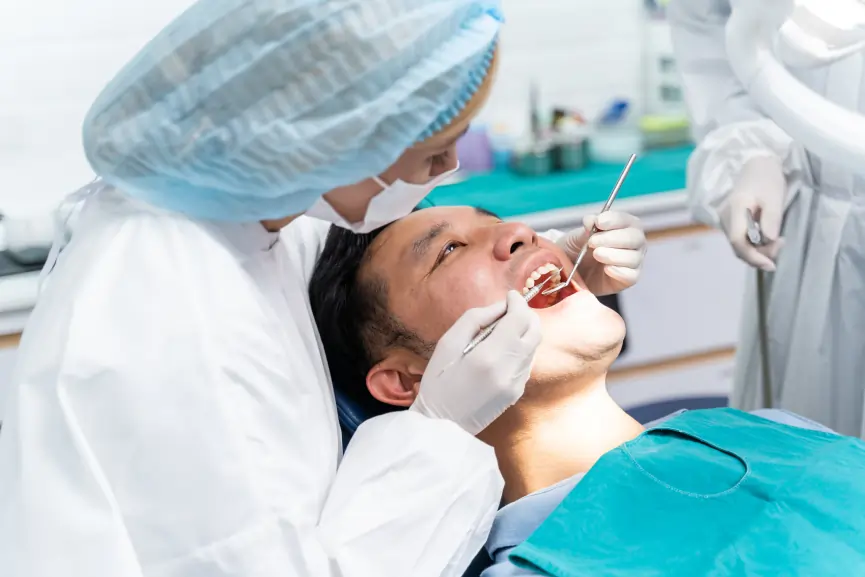
The dentist checks gum colour, swelling, bleeding, recession, tooth mobility, plaque, tartar, and areas that are hard to clean.
Gum Measurements
Small measurements may be taken around the teeth to check gum pocket depth. Deeper pockets can suggest gum disease.
X-Rays When Needed
X-rays may be recommended to check bone support around the teeth and areas not visible during the exam.
Cleaning Needs Review
The dental team checks whether routine cleaning, deeper scaling, or more frequent maintenance may be needed.
Home-Care Guidance
You may receive brushing, flossing, interdental brush, or water flosser guidance based on where plaque is collecting.
Treatment Plan
Your dentist explains what is happening, how serious it appears, and what steps may help control the condition.
Gum Disease Treatment Options
Treatment depends on how advanced the gum problem is.
Gum care may include:
- ✓Dental cleaning
- ✓Scaling to remove tartar buildup
- ✓Gum pocket monitoring
- ✓Oral hygiene coaching
- ✓More frequent maintenance cleanings
- ✓X-rays to check bone support
- ✓Review of risk factors such as smoking or dry mouth
- ✓Referral to a gum specialist if advanced care is needed
The goal is to reduce inflammation, control bacterial buildup, protect gum support, and prevent the condition from getting worse.
Dental Cleaning vs Gum Disease Treatment
A regular dental cleaning is usually for patients with generally healthy gums and routine plaque or tartar buildup.
Gum disease treatment is more focused on inflammation, bleeding, gum pockets, tartar below the gumline, and support around the teeth.
If your gums bleed easily, have deep pockets, or show signs of bone loss, you may need a more specific gum care plan rather than only a routine cleaning.
Gum Recession Care
Gum recession happens when the gumline pulls back and exposes more of the tooth or root surface.
Gum recession may be linked to:
- ✓Gum disease
- ✓Aggressive brushing
- ✓Thin gum tissue
- ✓Grinding or clenching
- ✓Tooth position
- ✓Tartar buildup
- ✓Previous gum inflammation
Recession can cause sensitivity, root exposure, and higher risk of root cavities. Your dentist can check the cause and explain how to protect the area.
Bad Breath and Gum Health
Bad breath can come from many causes, but gum disease and bacterial buildup around the gumline are common dental reasons.
If bad breath does not improve with brushing, flossing, and tongue cleaning, a gum health check may be needed.
The dentist can check for tartar buildup, gum pockets, infection concerns, cavities, dry mouth, or other oral causes.
Loose Teeth and Gum Disease
Loose teeth can be a sign of advanced gum disease, bite pressure, trauma, or another dental problem.
If you notice a tooth moving, shifting, or feeling unstable, book a dental visit promptly. The dentist may check gum pockets, bone support, bite forces, and X-rays.
Loose teeth should not be ignored.
How to Support Gum Health at Home
Daily care is important because plaque collects every day.
To support healthier gums:
- ✓Brush twice daily
- ✓Clean between teeth daily
- ✓Use floss or interdental brushes as advised
- ✓Brush gently along the gumline
- ✓Avoid smoking or tobacco exposure
- ✓Limit frequent sugary snacks
- ✓Drink water regularly
- ✓Book regular dental cleanings
- ✓Follow recommended gum maintenance visits
- ✓Call if bleeding, swelling, or bad breath persists
Home care helps, but tartar cannot be removed properly with brushing alone. Professional cleaning is still needed.
Cost and CDCP Information
The cost of gum health care depends on the exam, cleaning type, gum measurements, X-rays if needed, scaling required, and maintenance schedule.
Grimsby Lake Dental accepts CDCP for eligible patients and eligible dental services. CDCP coverage may apply to eligible exams, cleanings, scaling, X-rays, and related services depending on eligibility, frequency limits, co-payments, preauthorization, and plan rules.
If you have CDCP, private insurance, or another dental benefit, bring your coverage information so our team can help review estimated costs before care begins.
Related Services
Good to know
Frequently Asked Questions
Why do my gums bleed when I brush?+
Bleeding gums are often linked to plaque buildup, tartar, gingivitis, or gum disease. A dental exam can check the cause.
Are bleeding gums normal?+
No. Bleeding gums are common, but they are not considered healthy. They should be checked if they continue.
What is gum disease?+
Gum disease is inflammation or infection of the tissues that support the teeth. In advanced cases, it can affect bone support and tooth stability.
What is gingivitis?+
Gingivitis is early gum inflammation. It may cause redness, swelling, tenderness, or bleeding gums.
Can gum disease cause loose teeth?+
Yes. Advanced gum disease can damage the bone and tissues that support teeth, which may lead to loose teeth.
Can bad breath come from gum disease?+
Yes. Bacterial buildup, gum pockets, and tartar around the gumline can contribute to bad breath.
Is gum disease treatment painful?+
Gum treatment depends on the condition. Cleanings and scaling are planned based on gum health, comfort, and the amount of buildup present.
How often should I have gum maintenance?+
It depends on your gum condition, pocket depths, bleeding, tartar buildup, and risk factors. Your dentist will recommend a schedule.
Does CDCP cover gum disease treatment?+
CDCP may help cover eligible gum-related services such as exams, X-rays, cleanings, or scaling, depending on eligibility, frequency limits, co-payments, and plan rules.
Do you accept new patients for gum care?+
Yes. Grimsby Lake Dental welcomes new patients with bleeding gums, gum recession, bad breath, tartar buildup, or gum disease concerns.
Where is Grimsby Lake Dental located?+
Grimsby Lake Dental is located at 414 Winston Rd, Grimsby, ON L3M 0H2, near Lake Ontario and the QEW.
Book Gum Health Care in Grimsby
Have bleeding gums, swollen gums, bad breath, gum recession, tartar buildup, or loose teeth? Book a gum health assessment at Grimsby Lake Dental.