Orthodontic Services
Clear Aligners
Clear aligners are removable trays that gradually move teeth into better positions.
They may be suitable for mild to moderate crowding, spacing, rotated teeth, or selected bite concerns. Clear aligners are removed for eating, brushing, flossing, and drinking anything other than water.
Clear aligners require discipline because they only work when worn as instructed.
Invisalign
Invisalign is a clear aligner system that uses a series of removable trays to guide tooth movement.
It may be suitable for selected cases involving crowding, gaps, shifted teeth, rotated teeth, or mild to moderate bite concerns. Invisalign is less noticeable than metal braces, but it requires consistent wear.
Invisalign is a branded clear aligner system. Your dentist can explain whether Invisalign or another orthodontic approach is available and appropriate for your case.
Clear Braces
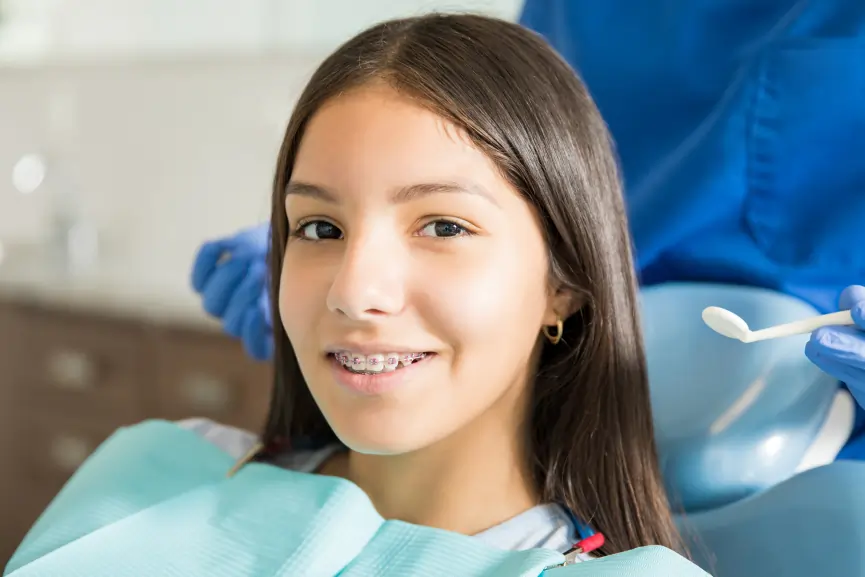
Clear braces use tooth-coloured or ceramic brackets with wires to move teeth gradually.
They work similarly to metal braces but are less noticeable. Clear braces may be useful for patients who want fixed orthodontic treatment but prefer a more discreet appearance than traditional metal brackets.
Because clear braces stay attached to the teeth, patients must clean carefully around brackets and avoid foods that can damage braces.
Metal Braces
Metal braces use stainless steel brackets and wires to guide teeth into better positions.
They are a fixed orthodontic option and may be suitable for crowding, spacing, rotated teeth, and selected bite concerns. Because they are not removable, they do not depend on tray wear time like aligners do.
Metal braces require regular adjustment visits, careful brushing, and avoiding hard or sticky foods that can break brackets or bend wires.
What Is Orthodontics?
Orthodontics is dental care focused on moving teeth into better positions.
It may help improve crowding, spacing, tooth rotation, bite alignment, and how upper and lower teeth meet. Orthodontic treatment can also improve smile appearance, but it is not only cosmetic. Better alignment may also make teeth easier to clean and may help reduce uneven bite pressure in selected cases.
Orthodontic treatment can include removable options, such as clear aligners or Invisalign, and fixed options, such as clear braces or metal braces.
The right option depends on your teeth, gums, bite, age, oral health, treatment goals, and how complex the tooth movement is.
Who May Need Orthodontic Treatment?
Orthodontic treatment may be useful for teens or adults with tooth alignment or bite concerns.
You may want an orthodontic consultation if you have:
- ✓Crowded teeth
- ✓Gaps between teeth
- ✓Crooked front teeth
- ✓Rotated teeth
- ✓Teeth that shifted after past braces
- ✓Overbite concerns
- ✓Underbite concerns
- ✓Crossbite concerns
- ✓Open bite concerns
- ✓Deep bite concerns
- ✓Uneven bite pressure
- ✓Difficulty cleaning between crowded teeth
- ✓Smile alignment concerns
- ✓Questions about aligners or braces
Not every patient needs orthodontic treatment. A consultation helps determine whether treatment is suitable and which option is realistic.
Clear Aligners, Invisalign, Clear Braces, or Metal Braces?
Different orthodontic options work in different ways.
Clear Aligners
Clear aligners are removable trays. They are less noticeable and convenient for eating and cleaning, but they require consistent wear every day.
Invisalign
Invisalign is a specific clear aligner brand. It works with a series of removable trays and may be suitable for selected mild to moderate orthodontic cases.
Clear Braces
Clear braces are fixed to the teeth and use tooth-coloured or ceramic brackets. They are less noticeable than metal braces but still use brackets and wires.
Metal Braces
Metal braces are fixed to the teeth and use metal brackets and wires. They may be suitable for patients who want a fixed option or who may not manage removable aligners well.
Your dentist will explain which option fits your case after checking your teeth, bite, gums, and treatment goals.
What Happens During an Orthodontic Consultation?
Teeth and Bite Assessment
Your dentist checks tooth crowding, spacing, rotations, bite relationship, jaw position, and how your upper and lower teeth meet.
Gum and Oral Health Review
Your gums, cavities, plaque levels, old dental work, and oral hygiene are reviewed before orthodontic treatment is considered.
X-Rays, Photos, or Records When Needed
X-rays, photos, scans, or impressions may be recommended to assess tooth roots, bone support, bite, and treatment planning.
Treatment Option Discussion
Your dentist explains whether clear aligners, Invisalign, clear braces, metal braces, or referral may be suitable.
Timeline and Responsibility Review
Orthodontic treatment requires time, regular visits, daily care, and patient cooperation. Your dentist explains what to expect before treatment begins.
Cost and Coverage Review
Our team reviews estimated costs and coverage where possible before treatment begins.
When Orthodontic Treatment May Need to Wait
Orthodontic treatment should usually begin only when the mouth is healthy enough for tooth movement.
Treatment may need to wait if you have:
- ✓Untreated cavities
- ✓Active gum disease
- ✓Poor oral hygiene
- ✓Severe tooth pain
- ✓Dental infection concerns
- ✓Broken teeth needing repair
- ✓Missing teeth requiring planning
- ✓Jaw issues requiring specialist review
- ✓Complex bite concerns needing orthodontist referral
Your dentist may recommend dental cleaning, fillings, gum care, restorations, or specialist referral before starting aligners or braces.
Orthodontics for Teens
Teens may need orthodontic treatment for crowding, spacing, bite concerns, rotated teeth, or teeth that are not erupting into ideal positions.
For teens, the choice between aligners and braces depends heavily on responsibility. Aligners must be worn consistently. Braces stay fixed to the teeth, which may be better for patients who may forget removable trays.
Your dentist can explain which option is more realistic after an exam.
Orthodontics for Adults
Adults can ask about orthodontic treatment for crowded teeth, gaps, shifted teeth after past braces, or smile alignment concerns.
Adult treatment planning must consider gum health, bone support, crowns, bridges, missing teeth, old dental work, tooth wear, and bite pressure.
Some adults may be good candidates for clear aligners or Invisalign. Others may need fixed braces or referral depending on complexity.
Cost and Coverage Information
The cost of orthodontic treatment depends on the type of treatment, case complexity, records, treatment length, number of aligners or adjustment visits, refinements, retainers, and whether specialist care is needed.
Clear aligners, Invisalign, clear braces, and metal braces may be considered orthodontic treatment. Private insurance coverage varies by plan.
CDCP coverage for orthodontic treatment may be limited and depends on eligibility, treatment type, program rules, and whether the service is covered in your case. Cosmetic alignment may not be covered.
Bring your private insurance, CDCP, or benefit information to your consultation so our team can help review estimated costs before treatment begins.
Why Choose Grimsby Lake Dental for Orthodontics?
Local Orthodontic Consultations in Grimsby
Our clinic is located at 414 Winston Road, near Lake Ontario and the QEW.
Multiple Teeth Straightening Options
Patients can ask about clear aligners, Invisalign, clear braces, and metal braces, depending on which services are confirmed and suitable.
Oral Health Checked First
We review teeth, gums, bite, cavities, and existing dental work before recommending orthodontic treatment.
Clear Treatment Explanations
We explain the difference between removable aligners and fixed braces so patients understand the responsibilities of each option.
Referral When Needed
If a case is complex, your dentist may recommend specialist orthodontic care instead of forcing the wrong treatment.
Good to know
Frequently Asked Questions
What is orthodontics?+
Orthodontics is dental care focused on moving teeth into better positions to improve alignment, spacing, bite function, and smile appearance.
What orthodontic options are available?+
Orthodontic options may include clear aligners, Invisalign, clear braces, and metal braces, depending on the patient’s needs and the services available at the clinic.
What is the difference between clear aligners and braces?+
Clear aligners are removable trays. Braces are fixed to the teeth with brackets and wires.
Is Invisalign the same as clear aligners?+
Invisalign is a specific brand of clear aligners. Clear aligners is the broader treatment category.
Are clear braces the same as metal braces?+
Clear braces and metal braces both use brackets and wires. Clear braces use tooth-coloured or ceramic brackets, while metal braces use metal brackets.
Which is better: aligners or braces?+
It depends on the case. Aligners may suit mild to moderate cases and responsible wear. Braces may be better for fixed treatment or more involved tooth movement.
Can orthodontics fix crowded teeth?+
Orthodontic treatment may help with crowded teeth, depending on severity, gum health, bite, and treatment suitability.
Can orthodontics close gaps?+
Orthodontic treatment may help close gaps between teeth, depending on why the gaps exist and how much movement is needed.
Do adults get orthodontic treatment?+
Yes. Adults can ask about orthodontic treatment for crowding, spacing, shifted teeth, or bite concerns.
Do teens need braces or aligners?+
It depends on the case and the teen’s ability to follow instructions. Aligners require consistent wear, while braces stay fixed to the teeth.
Do I need retainers after orthodontic treatment?+
Yes. Retainers are usually needed after aligners or braces to help prevent teeth from shifting back.
Is orthodontic treatment covered by insurance or CDCP?+
Private insurance coverage varies. CDCP coverage for orthodontic treatment may be limited and depends on eligibility, treatment type, and program rules.
Do you accept new patients for orthodontic consultations?+
Yes. Grimsby Lake Dental welcomes new patients who want to ask about teeth straightening options.
Where is Grimsby Lake Dental located?+
Grimsby Lake Dental is located at 414 Winston Rd, Grimsby, ON L3M 0H2, near Lake Ontario and the QEW.
Book an Orthodontic Consultation in Grimsby
Want to ask about clear aligners, Invisalign, clear braces, or metal braces? Book an orthodontic consultation at Grimsby Lake Dental to find out which teeth straightening option may be suitable for your smile.