
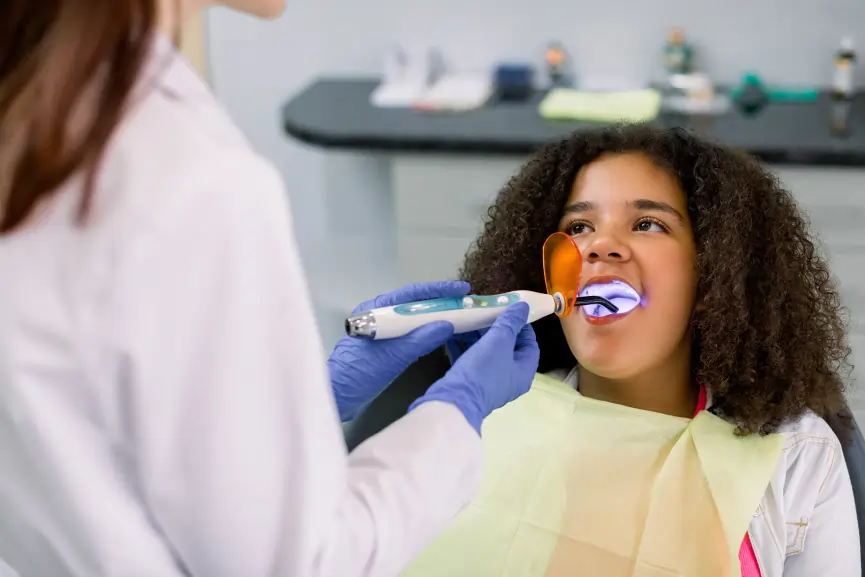
What Is Fluoride Treatment?
Fluoride treatment is a preventive dental service where concentrated fluoride is applied to the teeth to help strengthen enamel.
Enamel is the hard outer layer of the tooth. When enamel is exposed to acids from bacteria, food, and drinks, it can weaken over time. Fluoride helps make enamel more resistant to acid damage and may support early remineralization before tooth decay becomes larger.
Professional fluoride treatment is stronger than regular fluoride toothpaste. It is not automatically needed for every patient, but it can be useful when cavity risk is higher.
What Does Fluoride Do for Teeth?
Fluoride helps protect teeth by supporting enamel strength and reducing the effect of acid attacks.
Fluoride may help:
- ✓Strengthen weakened enamel
- ✓Reduce cavity risk
- ✓Support early enamel remineralization
- ✓Protect children’s developing teeth
- ✓Help adults with higher cavity risk
- ✓Support patients with dry mouth
- ✓Protect exposed root surfaces caused by gum recession
Fluoride does not replace brushing, flossing, dental cleanings, or a healthy diet. It works best as part of a complete preventive dental plan.
Who May Need Fluoride Treatment?
Fluoride is commonly used for children, but adults can also benefit in the right situations.
Fluoride treatment may be recommended if you have:
- ✓Frequent cavities
- ✓Early signs of enamel weakness
- ✓Sensitive root surfaces
- ✓Dry mouth
- ✓Gum recession
- ✓Deep grooves or hard-to-clean areas
- ✓Braces or orthodontic appliances
- ✓A history of many fillings
- ✓Frequent sugary or acidic snacks and drinks
- ✓Difficulty brushing or flossing effectively
- ✓A child who is still learning proper brushing habits
Your dentist or hygienist will recommend fluoride based on your actual risk, not as a one-size-fits-all treatment.
Fluoride Treatment for Children
Fluoride treatment can be helpful for children because their teeth are still developing and their brushing habits are still improving.
Children may have a higher cavity risk because of snack frequency, deep grooves in back teeth, missed brushing areas, or difficulty flossing. Fluoride may be recommended during routine dental visits to help strengthen enamel and reduce cavity risk.
Parents can ask our team how often fluoride may be useful and what home-care habits can help protect their child’s teeth.
Fluoride Treatment for Adults
Fluoride is not only for children. Some adults may benefit from professional fluoride treatment if their cavity risk is higher.
Adult fluoride treatment may be considered for patients with dry mouth, gum recession, exposed root surfaces, frequent cavities, older fillings, or areas that are difficult to clean.
If you are unsure whether fluoride is useful for you, your dentist or hygienist can assess your risk during a dental exam or cleaning visit.
What to Expect During Fluoride Treatment
Cavity Risk Review
Your dentist or hygienist reviews your cavity risk, enamel condition, dental history, and home-care routine.
Teeth Preparation
Fluoride is often applied after a dental cleaning, but it may also be recommended during another preventive visit.
Fluoride Application
Fluoride may be applied as a varnish, gel, or foam depending on the patient and clinical recommendation.
Quick Treatment Time
The application usually takes only a few minutes.
Aftercare Instructions
You may be asked to avoid eating, drinking, or rinsing for a short time after treatment so the fluoride can stay on the teeth.
Home-Care Guidance
Your team may also discuss brushing, flossing, toothpaste use, diet habits, and cleaning frequency to help reduce cavity risk.
Fluoride Treatment vs Dental Sealants
Fluoride treatment and dental sealants both help reduce cavity risk, but they work differently.
Fluoride treatment helps strengthen enamel across the teeth and supports resistance against acid damage.
Dental sealants are thin protective coatings placed on the chewing surfaces of back teeth to help block food and bacteria from deep grooves.
Some patients may benefit from fluoride, sealants, or both depending on age, tooth shape, cavity history, and dentist recommendation.
Can Fluoride Reverse Cavities?
Fluoride may help repair very early enamel weakening before a cavity becomes larger.
However, fluoride cannot fix a larger cavity, a hole in the tooth, or tooth decay that needs a filling. If decay has progressed, your dentist may recommend a dental filling or another treatment.
This is why regular exams are important: they help identify whether a tooth needs prevention, monitoring, or treatment.
Is Fluoride Treatment Safe?
Professional fluoride treatment is commonly used in dentistry when recommended at appropriate levels.
Your dental team considers age, cavity risk, enamel condition, and oral health needs before applying fluoride. For children, parents can ask how much fluoride is suitable and how to use fluoride toothpaste safely at home.
Cost and CDCP Information
The cost of fluoride treatment depends on age, treatment need, visit type, and dental coverage.
Grimsby Lake Dental accepts CDCP for eligible patients and eligible preventive dental services. CDCP coverage depends on eligibility, frequency limits, co-payments, and plan rules.
If you have private insurance, CDCP, or another dental benefit, bring your coverage information to your visit so our team can help review estimated costs before treatment begins.
Related Services
Good to know
Frequently Asked Questions
What is fluoride treatment?+
Fluoride treatment is a preventive dental service where concentrated fluoride is applied to the teeth to help strengthen enamel and reduce cavity risk.
What does fluoride do for teeth?+
Fluoride helps make enamel more resistant to acid damage and may support early remineralization before decay becomes larger.
Is fluoride treatment only for children?+
No. Fluoride is commonly recommended for children, but some adults may also benefit if they have higher cavity risk, dry mouth, gum recession, exposed root surfaces, or frequent cavities.
How long does fluoride treatment take?+
Fluoride treatment usually takes only a few minutes and is often done during a preventive dental visit.
Is fluoride treatment done after dental cleaning?+
Fluoride is often applied after a dental cleaning, but your dental team will recommend the right timing based on your oral health needs.
Can fluoride fix a cavity?+
Fluoride may help very early enamel weakening, but it cannot repair a larger cavity or hole in the tooth. A dental filling may be needed if decay has progressed.
What is the difference between fluoride and sealants?+
Fluoride strengthens enamel across the teeth. Sealants are protective coatings placed on the chewing surfaces of back teeth to help block food and bacteria from grooves.
Does CDCP cover fluoride treatment?+
CDCP may help cover eligible preventive dental services for eligible patients. Coverage depends on eligibility, frequency limits, co-payments, and plan rules.
Do you accept new patients for fluoride treatment?+
Yes. Grimsby Lake Dental welcomes new patients and families for preventive dental care.
Where is Grimsby Lake Dental located?+
Grimsby Lake Dental is located at 414 Winston Rd, Grimsby, ON L3M 0H2, near Lake Ontario and the QEW.
Book Fluoride Treatment in Grimsby
Want to know if fluoride is right for you or your child? Book a preventive dental visit at Grimsby Lake Dental.