What Are Dental Sealants?
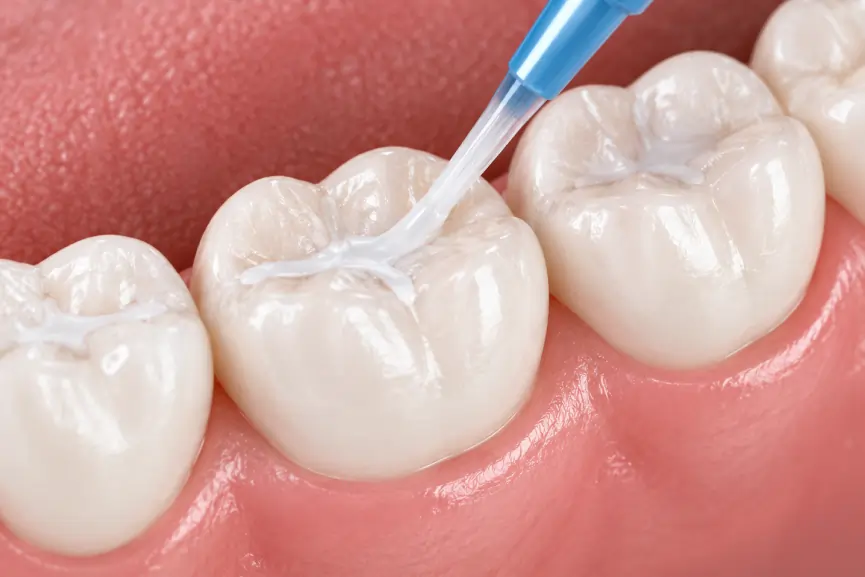
Dental sealants are thin coatings applied to the chewing surfaces of back teeth, usually molars and premolars.
Back teeth often have deep grooves, pits, and fissures where food and bacteria can collect. These grooves can be difficult to clean well with a toothbrush. Sealants help cover those grooves and create a smoother surface that is easier to keep clean.
Sealants do not replace brushing, flossing, dental exams, or cleanings. They are an added preventive layer for teeth that are more likely to trap food and plaque.
What Do Dental Sealants Do?
Dental sealants help protect the grooves of back teeth from food, plaque, and bacteria.
Sealants may help:
- ✓Reduce cavity risk in molars and premolars
- ✓Protect deep grooves that are hard to clean
- ✓Support cavity prevention for children and teens
- ✓Make chewing surfaces easier to keep clean
- ✓Protect newly erupted permanent molars
- ✓Support patients with a history of cavities
Sealants are most useful when the tooth is healthy or at risk but does not already have decay that needs a filling.
Who May Need Dental Sealants?
Dental sealants are commonly recommended for children and teens because their permanent molars are more likely to develop cavities soon after they come in.
Some adults may also benefit if they have deep grooves in back teeth and no existing decay in those areas.
Dental sealants may be recommended for:
- ✓Children with newly erupted permanent molars
- ✓Teens with deep grooves in back teeth
- ✓Patients who have difficulty cleaning molars
- ✓Patients with a history of cavities
- ✓Back teeth that trap food easily
- ✓Adults with deep grooves and no decay in those teeth
- ✓Patients who need extra cavity-prevention support
Your dentist will check the tooth surface and cavity risk before recommending sealants.
Dental Sealants for Children
Children’s first permanent molars usually come in around age 6, and second permanent molars usually come in around age 12. These teeth can have deep grooves that collect food and plaque.
Sealants may be recommended soon after the molars erupt if the chewing surfaces are at higher risk for cavities. They can be part of a child’s preventive dental plan along with regular dental exams, cleanings, fluoride when appropriate, and home-care habits.
Parents can ask during a child’s dental visit whether sealants are suitable.
Dental Sealants for Adults
Sealants are not only for children. Some adults may benefit if their back teeth have deep grooves and are still free of decay or large fillings on the chewing surface.
Adult sealants may be considered when the goal is to protect hard-to-clean grooves before decay starts. If a tooth already has a cavity, a dental filling may be needed instead.
What to Expect During Dental Sealant Treatment
Tooth Check
The dentist or hygienist checks the back teeth to see whether sealants are suitable.
Tooth Cleaning
The chewing surface is cleaned so the sealant can bond properly.
Tooth Preparation
The tooth surface is prepared and kept dry during placement.
Sealant Application
The sealant material is placed into the grooves of the tooth.
Hardening the Sealant
The sealant is hardened so it can form a protective coating over the chewing surface.
Bite Check
Your bite may be checked to make sure the sealed tooth feels comfortable.
The process is usually quick and does not involve drilling when the tooth is healthy and no cavity is present.
Dental Sealants vs Fluoride Treatment
Dental sealants and fluoride treatment both help reduce cavity risk, but they work differently.
Dental sealants protect the chewing grooves of back teeth by covering pits and fissures where food and bacteria collect.
Fluoride treatment helps strengthen enamel across the teeth and makes enamel more resistant to acid damage.
Some patients may benefit from sealants, fluoride, or both depending on age, tooth shape, cavity risk, and dentist recommendation.
Can Sealants Be Placed Over Cavities?
Sealants are usually placed on healthy teeth or teeth at risk of decay. If a tooth already has a cavity, your dentist may recommend a filling instead.
This is why a tooth check is important before sealants are placed. The dentist needs to confirm whether the tooth is suitable for sealing or whether another treatment is needed.
How Long Do Dental Sealants Last?
Dental sealants can last for years, but they can wear, chip, or come loose over time, especially on teeth used heavily for chewing.
Regular dental exams help your dentist check whether sealants are still protecting the tooth. If a sealant is worn or missing, your dentist can explain whether repair or replacement is needed.
Cost and CDCP Information
The cost of dental sealants depends on the number of teeth treated, age, tooth condition, visit type, and dental coverage.
Grimsby Lake Dental accepts CDCP for eligible patients and eligible preventive dental services. CDCP coverage depends on eligibility, frequency limits, co-payments, and plan rules.
If you have private insurance, CDCP, or another dental benefit, bring your coverage information to your visit so our team can help review estimated costs before treatment begins.
Related Services
Good to know
Frequently Asked Questions
What are dental sealants?+
Dental sealants are thin protective coatings placed on the chewing surfaces of back teeth to help protect deep grooves from food, plaque, and bacteria.
Who should get dental sealants?+
Sealants are commonly recommended for children and teens with newly erupted permanent molars, but some adults with deep grooves and no decay may also benefit.
Are dental sealants only for kids?+
No. Sealants are most common for children and teens, but adults may also benefit if their back teeth have deep grooves and are still healthy.
Do dental sealants prevent cavities?+
Sealants may help reduce cavity risk on the chewing surfaces of molars and premolars by covering grooves where food and bacteria collect.
Do sealants replace brushing and flossing?+
No. Sealants are an added layer of protection. Brushing, flossing, dental exams, and cleanings are still important.
What is the difference between sealants and fluoride?+
Sealants protect grooves on back teeth. Fluoride helps strengthen enamel across the teeth. Some patients may benefit from both.
Can sealants be placed on teeth with cavities?+
If a tooth already has a cavity, a filling may be needed instead. Your dentist will check the tooth before recommending sealants.
How long do dental sealants last?+
Sealants can last for years, but they should be checked during regular dental exams because they can wear or come loose over time.
Does CDCP cover dental sealants?+
CDCP may help cover eligible preventive dental services for eligible patients. Coverage depends on eligibility, frequency limits, co-payments, and plan rules.
Where is Grimsby Lake Dental located?+
Grimsby Lake Dental is located at 414 Winston Rd, Grimsby, ON L3M 0H2, near Lake Ontario and the QEW.
Book Dental Sealants in Grimsby
Want to know if sealants are right for you or your child? Book a preventive dental visit at Grimsby Lake Dental.