What Is a Dental Cleaning?
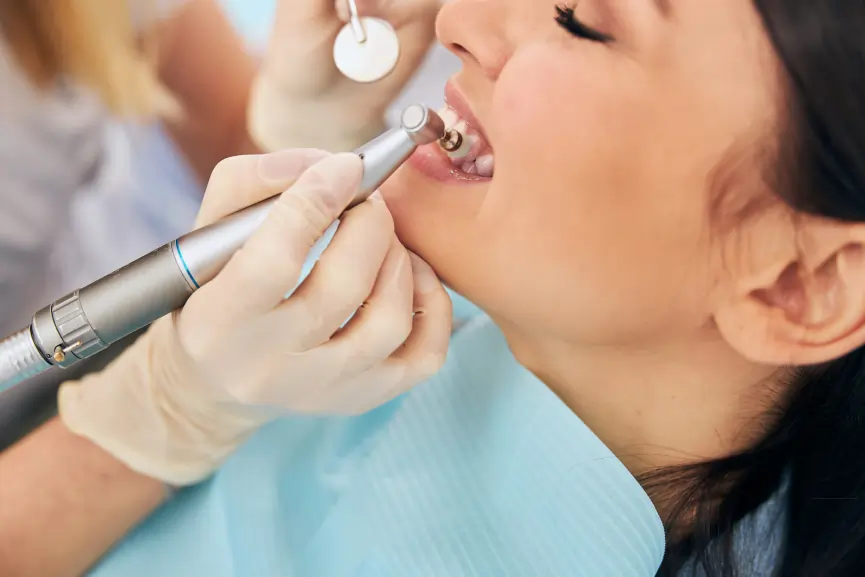
A dental cleaning is a professional hygiene visit that removes plaque, tartar, and surface buildup from your teeth and gumline.
Plaque is a sticky film that forms on teeth every day. If plaque hardens, it becomes tartar. Tartar cannot be fully removed with brushing or flossing at home, which is why professional dental cleaning is important.
Dental cleaning helps support gum health, reduce buildup, freshen breath, and lower the risk of cavities and gum problems.
What Does a Dental Cleaning Include?
Plaque and Tartar Removal
The hygienist removes plaque and tartar buildup from the teeth and around the gumline using professional dental instruments.
Gumline Cleaning
Special attention is given to areas around the gums, where buildup can collect and contribute to inflammation or bleeding.
Teeth Polishing
Polishing helps smooth the tooth surface and remove some surface stains.
Professional Flossing
Flossing helps clean between teeth and shows areas where plaque may be collecting.
Gum Health Review
Your hygienist may check for signs of gum sensitivity, bleeding, inflammation, or areas that need more home-care attention.
Fluoride Guidance
Fluoride may be recommended for patients who need extra cavity protection. Your dental team will explain if it is suitable for you.
Home-Care Advice
We may recommend brushing, flossing, toothpaste, or hygiene changes based on what we see during your visit.
Who Should Book a Dental Cleaning?
Dental cleanings are useful even if your teeth feel fine. Plaque and tartar can build up slowly, especially around the gumline and between teeth.
You may need a dental cleaning if you want to:
- ✓Remove plaque and tartar buildup
- ✓Help support healthier gums
- ✓Freshen your breath
- ✓Remove surface stains
- ✓Reduce cavity risk
- ✓Clean areas that are hard to reach at home
- ✓Return to dental care after time away
- ✓Book preventive care for your child or family
- ✓Ask how often you should schedule cleanings
Dental Cleaning vs Dental Exam
Dental cleanings and dental exams are often booked together, but they are not the same service.
A dental cleaning removes plaque, tartar, and surface buildup from the teeth and gumline.
A dental exam is when the dentist checks your teeth, gums, bite, jaw, oral tissues, and existing dental work to identify oral health concerns.
If you are due for both, our team can help you book the correct appointment type.
How Often Should You Get a Dental Cleaning?
Many patients book a dental cleaning about every six months. Some patients may need cleanings more often depending on gum health, tartar buildup, cavity risk, dry mouth, medical history, or dentist/hygienist recommendation.
Your cleaning schedule should be based on your oral health needs, not a one-size-fits-all rule.
Can Dental Cleaning Help With Bad Breath?
Dental cleaning may help improve bad breath when odour is linked to plaque, tartar, food buildup, or gumline bacteria.
Bad breath can also have other causes, including dry mouth, cavities, gum disease, diet, smoking, or medical factors. If bad breath continues, your dental team may recommend an exam to check for underlying concerns.
Does Dental Cleaning Remove Stains?
Dental cleaning can remove some surface stains caused by food, drinks, or daily buildup. It does not change the natural colour of the teeth the way whitening treatment may.
If your main concern is tooth colour, our team can explain whether cleaning, whitening, or another option is more suitable.
Cost and CDCP Information
The cost of dental cleaning depends on your gum health, amount of buildup, time needed, scaling units, and dental coverage.
Grimsby Lake Dental accepts CDCP for eligible patients and eligible dental cleaning services. CDCP coverage depends on eligibility, frequency limits, co-payments, scaling units, and plan rules.
If you have private insurance, CDCP, or another dental benefit, bring your coverage information to your visit so our team can help review estimated costs before treatment begins.
Related Services
Good to know
Frequently Asked Questions
What does a dental cleaning include?+
A dental cleaning usually includes plaque and tartar removal, gumline cleaning, teeth polishing, professional flossing, gum health review, and home-care advice. Fluoride may be recommended when suitable.
Does dental cleaning remove tartar?+
Yes. Professional dental cleaning removes tartar buildup that cannot be fully removed with brushing or flossing at home.
How often should I get a dental cleaning?+
Many patients book cleanings about every six months, but your ideal schedule depends on gum health, tartar buildup, cavity risk, dry mouth, and dentist or hygienist recommendation.
Is dental cleaning the same as a dental exam?+
No. A cleaning removes plaque, tartar, and buildup. A dental exam checks your teeth, gums, bite, jaw, soft tissues, and overall oral health.
Can dental cleaning help with bad breath?+
Dental cleaning may help freshen breath when bad breath is linked to plaque, tartar, food buildup, or gumline bacteria. If bad breath continues, a dental exam may be recommended.
Does dental cleaning whiten teeth?+
Dental cleaning can remove some surface stains, but it does not whiten teeth like a teeth whitening treatment.
Does dental cleaning hurt?+
Most routine cleanings are comfortable. If your gums are sensitive, inflamed, or there is heavy buildup, you may feel some tenderness. Tell our team if you feel nervous or uncomfortable.
Does CDCP cover dental cleaning?+
CDCP may help cover eligible dental cleaning services for eligible patients. Coverage depends on eligibility, frequency limits, co-payments, scaling units, and plan rules.
Do you accept new patients for dental cleaning?+
Yes. Grimsby Lake Dental welcomes new patients of all ages for dental cleanings and preventive care.
Where is Grimsby Lake Dental located?+
Grimsby Lake Dental is located at 414 Winston Rd, Grimsby, ON L3M 0H2, near Lake Ontario and the QEW.
Book a Dental Cleaning in Grimsby
Need a routine cleaning, overdue hygiene visit, or preventive dental care for your family? Book a dental cleaning at Grimsby Lake Dental.